........................................................... NNN
Nail (kugi, kui) Japan
Nail, nails, cutting the fingernails (tsumekiri) Japan
Nairobi Bomb Day (Kenya)
Nairobi Int. Trade Fair (Kenya)
naked (hadaka, hadanugi) Japan
Naked Festivals (hadaka matsuri, hadaka mairi ) Japan. a LIST
Namasu vinegar dressing (namasu) Japan
. Names of persons used in haiku LIST
Namib desert beetle
Nandina (Nanten, Japan)
Nantaisan, Mount Nantai ... and its festival. Japan
Nara, the ancient capital
..... Nara pickles (narazuke) and other tsukemono pickles. Japan
National Day Worldwide
National Holidays of Japan
Nebuta Festival (Nebuta matsuri) Japan. Aomori
Needle, Sewing needle memorial service (hari kuyoo) Japan
Neem blossoms, neem tree, margosa (Azadirachta indica) India. And Ugadi Pachadi
Nehru, Pandit Jawaharlal Nehru’s Memorial Day, Children's Day India
..... Nepal, Haiku Information INDIA SAIJIKI
Netherworld, the other world (meido) Japan
Nettle tree (enoki) Chinese hackberry tree. Celtis sinensis var. japonica. Japan
Nettle plants, Nesseln
. . . . . NEWS, NEWSLETTER latest articles of the WKD
News, Newspaper headlines, Haiku News worldwide
NEW YEAR
SAIJIKI and KIYOSE
...................... inclucing
New Year (shinnen, shin nen) Worldwide
..... First Things done at the New Year . a KIGO list . Japan
..... New Year Ceremonies of Japan A topical Saijiki
..... Ancestors New Year (Hotoke Shoogatsu) Japan
.....Little New Year .. ko shoogatsu (January 15) Japan. Women's New Year (onna shoogatsu, me shoogatsu)
..... New Year's Day (ganjitsu) Japan
New Year's Food ... KIGO LIST
..... New Year's Decorations (o-kazari) Japan. Kadomatsu, Shimenawa and more
..... New Year's Soup (zooni)
..... New Year's Tea, Good Luck Tea, lucky tea (fukucha) Japan
Newspaper vendor, newspaper boy Kenya
..... New Zealand and Tasmania Haiku "Kiwi Haiku"
..... NHK HAIKU ... NHK 俳句
Nichiren / Saint Nichiren (1222 - 1282). Japan
. . . Night (yoru) Japan. a KIGO list
Night of Power, Lailatul Qadr / Lailat-Ul-Qadr Yemen
Nightingale, bush warbler (uguisu) Japan
Night school (yogaku, yogakkoo) Japan
Night stories (yobanashi) and diorama toys (tatebanko) Japan
Night work (yonabe) Japan
Nine Eleven 2001, USA 9/11. September Eleven
Nirvana Ceremony Nehan-E, Jooraku-E (Japan)
Nobel Prize Europe, worldwide
Noh-Performance at night (Takagi Noo)Japan. yugen (yuugen).
Noodle Soup (kama-age udon) Japan
Noon, daytime (hiru) a KIGO list
..... North America Saijiki Introduction
Nose (hana) Japan. blowing your nose
November (juuichigatsu) Japan. Worldwide.
Nozaki Pilgrimage, Japan
. . . . . Numbers used in Kigo Japan
Numbers .. used in Japanese Haiku
Nuts, fruits and seeds of trees (konomi) Japan. KIGO list
........................................................... OOO
Oak trees of Japan (Quercus) and acorns (donguri)
October (juugatsu)
Octopus (tako) Japan. Also squid (ika)
Oden hodgepodge stew Japan
Official, minor official (yakunin, koyakunin) Japan, Edo period
..... Oklahoma Saijiki
Oktoberfest Germany
Okra (okura) : Abelmoschus esculentus vegetable. Japan
Oleander (kyoochikutoo) Japan. Yemen
Olive, olives (oriibu) Japan. Yemen
Olympics, Olympic Games Worldwide. Special Olympics, Paralympics.
O-Mizutori, Omizutori Ceremony) Shuni-E Ceremony Nara, Japan
One Day Saijiki, a KIGO list
Morning, Midday (daytime), Evening, Night
Onion (tamanegi) and many other summer vegetables
Onomatopoetic Words used in Haiku Repetition of words
Opera ball (Opernball) Germany, Austria
Oranges, Mandarin Oranges, Tangerines Kenya. Mikan (Japan). Florida (USA)
Orchid, orchids (ran) Japan
Origami, folding paper Japan, worldwide
Otter, fishotter (kawauso) Japan
Outdoor activities in Summer Japan
Outdoor enjoyments in autumn (aki no no-asobi) Japan. some activities, outings, picnics
Owl (fukuroo) mimizuku. Snowy Owl (Japan) Eule, Uhu
Oysters (kaki) Japan Including Pearls (shinju) and mother-of-pearl
........................................................... PPP
Paddy, Fields, rice paddies (ta, hatake) Japan
Pagoda (too, tou), stone pagoda (sekitoo) Japan
Pain (itami), suffering Japan
. . . . . Pakistan ... Haiku in Pakistan
Palanquin, sedan chair (kago) Japan
Palm Tree Yemen. Royal palm, Kenya.
Palm Sunday Kenya, Europe
Pampas grass (susuki) during the year Japan
Panchatantra, a Fable India
Pansy, Pansies Europe, sanshoku sumire (Japan)
Pantaloons flower (hotarubukuro, hotaru-bukuro Campanula punctata
Papad Bread (papadam, poppadom, papadum, and appalam) India
Papaya fruit. Carica papaya India, Yemen
Paper, "pocket paper" (kaishi) Japan. and more about Japanese paper (washi)
Paperbark tree, Melaleuca honey myrtles, punk tree. Australia
Paper clothing, paper robes (kamiko) Japan
Paper mulberry leaf (kaji no ha) and Tanabata rituals
Parade of the bands (Trinidad and Tobago)
Paradise (gokuraku) Japan
Parang .. Serenaders (Trinidad and Tobago)
Parasol
Parrots Southern California
Passion Flower (tokeisoo) Japan. Other regions.
Patrick's Day (Ireland) St. Patrick's Day
Paulownia (kiri) Japan. P. tomentosa
Peace Festival (heiwa matsuri) Hiroshima Japan. Peace and War Haiku.
Peace (Swahili : Amani) Kenya
Peach fruit (hakutoo, momo) Japan
Peach blossoms (momo no hana)Japan
Peacock, Kujaku and Haiku Japan, peacock butterfly (kujakuchoo)
Peanuts Japan, Philippines
Pear, Japanese pear, Asian pear (nashi)Westeern pear, yoonashi
Pelican Australia, Kenya
Pemmican (Romania)
Pencil (enpitsu) Japan
Peony (botan, Japan Winter Peony (kan botan)
PEPPER, (togarashi, toogarashi) red hot pepper Shichimi Togarashi and more, Chili pepper, paprica Paprika (piiman), sweet green pepper (shishitoo) and more
Peppermint (hakka) Japan
Perfume (koosui), eau-de-Cologne Japan
Perry Festival (Perii sai) Matthew Calbraith Perry in Japan. Black Ships Festival (Kurofune Matsuri)
..... Persia
. Personal Names used in Haiku . LIST
Personification (gijinka), anthropomorphism and KIGO
Perilla, beefsteak plant (shiso) Japan
..... Periods of Japanese History Reference Material
..... Periods and eras of Japanese History (nengoo, Nengô) Reference Material
Persimmon (kaki, hoshigaki) Japan
Phallus, the male symbol
Pheasant (kiji) Japan, worldwide
Pheasant's Eye (fukujusoo) (Japan)
PHOENIX in Asian Art and Haiku (ho-o, hoo-oo)
..... Philippines Saijiki
..... Philosophical Haiku India
Pickerel weed, pickerelweed (Pontederia cordata) America
Picknick (pikunikku) and outdoor enjoyment Japan. playing in the mountains
Pigeon, pidgeon, dove (hato) Japan dove whistling (hatobue)
Pig, pigs Kenya
Pig and Pork (buta, ton)
Pike, pike conger, pike eel (hamo) Muraenesox cinereus. dragontooth. Japan
Pilgrimage(henro, junrei)Pilgrims. Japan and worldwide
Pillow (makura) in all seasons Japan
Piment, bell pepper, green pepper, Paprika (piiman) Japan. Capsicum annuum
Pine (matsu, Japan)
..... Pulling Pine Seedlings (komatsu hiki) Japan
Pine mushroom (matsutake) Japan. Kiefernpilz
Pineapple, Ananas comosus Kenya
Pinewood Derby North America
Pink, fringed pink (nadeshiko). Wild carnation Japan. Rock Carnation (ganpi)
Pipal tree (Ficus religiosa) Peepul or Bo tree. Fig Tree, figs (ichijiku) Japan. bodhi tree, bodaiju
Pissing, pee, pipi (shooben) Japan and worldwide
..... PLACE NAMES used in Poetry and Haiku (utamakura) Japan and Worldwide
Place names used in KIGO
Plain, plains, wild fields, marsh (nohara, no) Japan
..... PLANTS in all seasons . . . SAIJIKI
Planting, harvesting and preparing food in SPRING kigo
. . . . . Planting, harvesting and preparing food in AUTUMN kigo
Platanus (sycamore) Europe, other areas. Momijiba-suzukake (London plane tree)
Pleiades (matariki) Maori, New Zealand. (subaru, Japan)
Plover (chidori) Japan
Plough, hoe (kuwa) Japan
plowing (tagayashi)Japan
Plum blossoms (ume) Japan. Dried plums (ume boshi) and any related UME kigo.
..... Plum blossom fragrance (ume ga ka) Japan
Plum fruits and ripe peaches Kenya
Plumbago <> KIGO
Poacher's Moon
. POETS ... Introducint Japanese Haiku Poets
Poinsettia
Polar bear = ours polaire (ou « ours blanc » ) Canada
Polar Night Polar Circle
Pomegranate (zakuro). Granatapfel Japan
Pond, small lake (ike) Japan. a KIGO list ... even the OLD POND ...
Pool cage Florida,USA
Poppy flowers (keshi no hana) Japan. Poppy Day.
Portions, large food portions (yamamori, oomori) Japan
Postcard, postcards for the New Year (nengajoo) Japan
Potato, potatoes (jagaimo, jaga imo) Japan. Kenya
Pottery, Pots and Plates (yakimono) Japan
Poui Tree (Tropics)
Pounding Rice (mochi tsuki) Japan, Philippines
..... New Year's Rice Dumplings (toshi no mochi, kagamimochi, zoonimochi) and a few more
..... The Hare/Rabbit in the Moon
Power failure, power cut, electricity rationing, blackout ... Kenya
Power Stone, Strenght Stone (chikara ishi, Japan) weight lifting competition
Praise, flattery (homekotoba, o-joozu) Japan
Prayer (kitoo) Japan
Prayer Flags, prayer flag Tibet, Japan
Praying Mantis, Mantid (Japan) kamakiri,tooroo
.. .. .. Prairie : North American Prairie Saijiki
Presents (seibo, chuugen) in all seasons Japan
Prickly Pear Cactus, Opuntia FamilyYemen, North America
Priest, Buddhist priest or monk (oshoo) Japan
Primula, Japanese primrose (sakura-soo) Japan. Japanese primrose . . .
..... Evening primrose (tsukimisoo) Japan
..... Provinces of Old and Prefectures of Modern Japan Reference Material
Puddle, puddles Tropical regions, Japan
Pumpkin, squash (kabocha, nankin) Japan. Kürbis
Puppeteer (kairaishi) and performances at New Year Japan. puppets and dolls
Puzzle, a game
........................................................... QQQ
Quail (uzura) Japan. quail eggs, uzura no tamago
Queen's Day in the Netherlands
. . . . . Question mark ? ... KA か and more about punctuation.
Quilt coat, bedtime coat (yogi) Japan
Quince (boke) Japan. Yemen. Cydonia oblonga and others. Marumero, Chinese quince (karin)
. . . . . Quotes with Haiku ... to enjoy on a rainy day !
Quran, Qur'an, Koran, Kur'an
........................................................... RRR
Rabbit, hare (usagi), snow rabbit (yukiusagi) Japan
Racoon, racoon dog, badger (tanuki) Japan
Radio Day (denpa no hi) Japan
Radish (daikon) Japan. Pickled radish, takuan.
Raft (ikada) rafting timber Japan
Rail, water rail (kuina) Japan. Rallus aquaticus
Railway Haiku Train station, Platform ... related words.
.. .. .. .. Rain in various KIGO (Japan)
... Rain on Cherry Blossoms (hana no ame) Japan
... Rainbow (niji) Japan
... Raincoat, straw raincoat (mino) Japan
... Rain Gutters Cleaning North America. (eavestroughs)
... Rain Rituals (amagoi) Japan. Rain Dance, Rain Prayer, Regenzauber
... Rainy Season (tsuyu) Japan
Rakugo, comic storytelling performances Japan
Ramadan
..... Ramazan, Berat Kandil Turkey Leylatul Berat, Laylatul Barat
..... -- Ramadhan in Kenya
..... Ramadan ends (Idd ul Fitr) Kenya. Ramadhan
Rapeseed blossoms (na no hana) Japan. rapeseed harvest and more
Rattan chair (too isu) rattan mats ... Japan
Raw fish, sashimi, sushi and .. rice balls (onigiri) Japan
Red, the color red (kurenai, akai) Japan. cinnabar, akane . . .
Redcurrants Ireland, Europe. Rote Johannisbeeren
Redwing, Red-wing (Turdus iliacus) North America
Reed cutting (ashikari) Japan
Reed warbler (yoshikiri, gyoogyooshi) Japan
Refrigerator (reizooko) Japan
Reformation Day (Reformationsfest, Germany)
Renku ... linked poetry
Republic Day January 26 (India)
Retreat for monks (ango) Japan. varshika or vassa
Rhinoceros beetle (kabutomushi) Japan
Rhode Island USA
Rhododendron (shakunage, sekinan ) Japan
Ribbon (ribon) Japan
..... Rice plants (ine) Japan. A list of kigo. New rice (shinmai)
Rice fields(tanbo, tanada) Japan. A list of kigo.
Rice (gohan, meshi) as food. Japan
Rice balls (nigiri, o-nigiri, musubi, yaki-onigiri
Rice cake offerings for the New Year (kagami mochi) Japan
Rice cakes (mochi) for SPRING a KIGO list
Rice gruel (kayu) Japan. rice porridge, congee in many kigo. Oatmeal porridge. Reisbrei, Haferbrei
Rice wine (ricewine) sake, Japan Reiswein
River(kawa) Japan, worldwide. rapids, waterfall ...
River mist Ireland
Road (michi) path, way. Japan
Roadside sanctuaries, wayside shrines (tsujidoo) Japan
Robin, the Bird American Robin (Turdus migratorius) . European Robin (Erithacus rubecula)
Rock, boulder (iwa) and stones Japan
Roe, fish roe dishes (sujiko and many others) Japan
Rollerskates (India, worldwide) Rollerblades
.. .. .. .. .. Romanian Saijiki
"Rosary Beads Plant" : Juzudama "Beads of the Rosary" Job's tears, a plant. And more about the rosary (nenju, juzu) in Japan!
Rose (bara) Japan. Worldwide
Rose of Sharon (mukuge) / Hibiscus (bussooge) Japan . Yemen
Roundness (hito-marume), round things Japan
Rubber plantIreland
Rumpot (Rumtopf) Germany
Running of the Bulls (El Encierro) Spain
. Russia, Russland .
Ryokan Day .. Ryokan-ki, Ryokan Memorial Day (Japan)
:::::::::::::::::::::::::::::::::::::::::::::::::::::::::::::::::::::::::::::::::::::::::::::::::::::
Contents from A to J
Contents from K to M
Contents from N to R
Contents of S
Contents from T to Z
:::::::::::::::::::::::::::::::::::::::::::::::::::::::::::::::::::::::::::::::::::::::::::::::::::::
Showing posts sorted by date for query reed. Sort by relevance Show all posts
Showing posts sorted by date for query reed. Sort by relevance Show all posts
12/29/2013

7/03/2010
Moon in Autumn - tsukimi
[ . BACK to Worldkigo . TOP . ]
:::::::::::::::::::::::::::::::::::::::::::::::::::::::::::::::::::::::::::::::::::::::::::::::::::::
Moon in autumn (aki no tsuki)
***** Location: Japan
***** Season: Autumn
***** Category: Heaven
*****************************
Explanation
The moon is the most important kigo for autumn, just as the cherry blossoms are inseparable from spring.
In the times without electric light the full moon was an important source of illumination, giving the farmers an edge on working longer hours in the fields for the harvest.
The custom of viewing the full moon (tsukimi) in mid-autumn was introduced to Japan from China during Nara and Heian period (710-1185). There are many humanity kigo dealing with this.
. tsukimi 月見 つきみ moon viewing
..... kangetsu 観月(かんげつ)
Let us look at the moon kigo of the category HEAVEN.
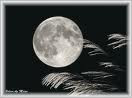
aki no tsuki 秋の月 moon in autumn
The phases of the moon are often compared to a bowstring, maybe reflecting the samurai spirit of the earlier ages.
tsuki 月 (つき) moon, der Mond
This refers to the FULL MOON on the 15th day of the 8th lunar month, counting a lunar month from day one to day 30.
There are also special kigo for almost every night from the first to the thirtiest of the eighth lunar month. Some overlap and are placed for all the three months of autumn as well as only for the special night of the eighth lunar month, now in september.
The Basics
... the MOON in all SEASONS
月天心貧しき町を通りけり
. tsuki tenshin mazushiki machi o toorikeri .
Yosa Buson 与謝蕪村 and his moon haiku !
:::::::::::::::::::::::::::::::::::::::::::::::::::::::::::::::::::::::::::::::::::::::::::::::::::
kigo for early autumm
bon no tsuki 盆の月 (ぼんのつき)
full moon at the O-Bon festival
On the 15th day of the seventh lunar month.
It is still hot and people use a handfan that looks like a full moon to enjoy a small breeze.

In the Edo period, they put cut-out lanterns (kiriko tooroo 切子燈篭 ) on the shelf for the ancestors and the eaves of the home and enjoyed them in the moonlight as an offering to the ancestors.
. . . CLICK here for Photos !
. O-Bon, the Ancestor Festival and KIGO
:::::::::::::::::::::::::::::::::::::::::::::::::::::::::::::::::::::::::::::::::::::::::::::::::::
kigo for mid-autumm
This is the eighth month of the lunar calendar,
with the full autumn moon, now in September.
hatsuzuki 初月 はつづき "first moon"
hatsuzukiyo 初月夜(はつづきよ)night with the first moon
Waiting for the full moon, people started to enjoy from early in the eighth lunar month. This kigo refers to day 4, 5 and 6.
futsukazuki 二日月 (ふつかづき) moon on the second day
second-day crescent moon
..... sengetsu 繊月(せんげつ)"thin fiber moon"
..... futsuka no tsuki 二日の月(ふつかのつき)
The moon appears in the sky for a short time after sunset.
.................................................................................
mikazuki 三日月 (みかづき) moon on the third day
third-day crescent moon
mikka no tsuki 三日の月(みっかのつき)
tsuki no mayu 月の眉(つきのまゆ)moon like an eyebrow
..... mayugakizuki 眉書月(まゆがきづき)
..... mayuzuki 眉月(まゆづき)
mikkazukimayu 三日月眉(みかづきまゆ)
The moon shows up for a short time, looking in shape like an eyebrow.
This is also used as a common name for the moon of the first three days, sometimes even including the fourth day.
The brightly shining part of the moon is called MEI 明,
the dark part is HAKU 魄.
shohaku 初魄(しょはく)first "dark moon"
After the third day, this part becomes more and more visible each night.
shingetsu 新月(しんげつ) "new moon"
This is usually reserved for the 15th day full moon, but in some old poetry collections it is also used for the third-day moon.
jakugetsu 若月(じゃくげつ)"young moon"
tsuki no tsurugi 月の剣(つきのつるぎ)"moon like a sword"
gabi 蛾眉(がび) "eyebrow like a moth"
This is also an alternate name for a beautiful lady.
.................................................................................
matsuyoi 待宵 まつよい "waiting in the evening"
"evening spent waiting"
komochizuki 小望月(こもちづき)"little full moon"
The 14th day of the eighth lunar month.
The day before the full autumn moon.
Since you do not know if tomorrow might be clouded, you might as well celebrate this night, if the moon was bright and visible.
Poems with this kigo refer to a certain longing, especially in love poems.
.................................................................................

source : mingeijapan - Furoshiki
meigetsu 名月 ( めいげつ) "famous moon" harvest moon
The full moon of the eighth lunar month, now in September.
juugoya 十五夜(じゅうごや)night of the fifteenth
The deity revered on this night is Dainichi Nyorai 大日如来.
chuushuusetsu 仲秋節(ちゅうしゅうせつ)seasonal point in mid-autumn
This refers to the Chinese custom of celebrating the full moon.
People celebrated the changes of all things, now from a full moon to the waning moon.
There are many different customs in various regions of Japan to celebrate this day with special offerings and rituals.
For example sweet potatoes, edamame beans, moon-viewing dumplings and susuki reed grass.
In some areas, the day 13 is also celebrated in this way, but more often in the ninth lunar month.
imo meigetsu 芋名月(いもめいげつ) "Sweet Potato Full Moon"
Offerings of sweet potatoes were made in the evening.
kyoo no tsuki 今日の月(きょうのつき)moon of today
koyoi no tsuki 今宵の月(こよいのつき)moon of this night
..... tsukikoyoi, tsuki koyoi 、月今宵(つきこよい)
nadakaki tsuki 名高き月(なだかきつき)famous moon
..... sangoya 三五夜(さんごや)
..... sango no tsuki 三五の月(さんごのつき)
..... tanshoo no tsuki 端正の月(たんしょうのつき)
mangetsu 満月(まんげつ)full moon
meigetsu 明月(めいげつ)clear moon
with no clouds in the sky
Some old sources say :
meigetsu 名月 is only once a year, but
meigetsu 明月 is every month.
.................................................................................
mochizuki 望月(もちづき)full moon (in the east)
mochi no yo 望の夜(もちのよ)night with the moon (in the east)
MOCHI refers to the moon coming up in the opposite direction to where the sun went down, going up in the east.
"auspicious moon"
This is opposed to the phase of the moon between the sun and the earth, called SAKU 朔.
After the moonless days of SAKU, the moon becomes a "three day moon" (mikazuki).
Mochizuki is quite a common family name in Japan.
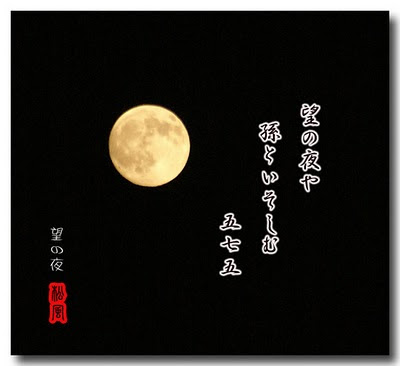
source : 松風
full moon night -
together with my grandchildren
I enjoy writing haiku
Tr. Gabi Greve
.................................................................................
ryooya 良夜 (りょうや) "good night"
night with a good view of the moon
..... ryooshoo 良宵(りょうしょう)
..... kashoo 佳宵(かしょう)
Sometimes also used for day 13 of the ninth lunar month.
On this day, the constellation "tataraboshi たたら星" (rooshuku / roshuku 婁宿) (chinese "Bond" constellation) of the 28 mansions was seen most clearly in the sky.
.................................................................................
mugetsu 無月 むげつ "no moon" moonless
kumoru meigetsu 曇る名月(くもるめいげつ)cloudy full moon
chuushuu mugetsu 仲秋無月(ちゅうしゅうむげつ)mid-autumn without moon
tsuki no kumo 月の雲(つきのくも)clouds before the moon
The night of the full moon, but it is clouded and the moon can not be seen.
ugetsu 雨月 (うげつ) moon in the rain
lit. "rain and moon"
ame meigestu 雨名月(あめめいげつ)rain and full moon
ameyo no tsuki 雨夜の月(あまよのつき)rainy night and moon
ame no tsuki 雨の月(あめのつき)moon in the rain
tsuki no ame 月の雨(つきのあめ)rain and the moon
The night of the full moon, but it is raining and the moon can not be seen.
.................................................................................
Now we come to the nights after the full moon !
I count them as "day x", refering to the counting of the days of the eighth lunar month. Rememer, this refers to the times without electricity.
izayoi 十六夜 (いざよい) moon on day 16
..... izayoo tsuki いざよう月(いざようつき)"hesitant moon"
..... nihachiya 二八夜(にはちや)
..... juurokuya 十六夜(じゅうろくや)night on the 16th day
..... kibou, kibo-u 既望(きぼう)
The moon shows up just a bit later than the full moon on the day before, as if it was hesitant (izayou, tamerau) to come back.
. - Matsuo Basho and his izayoi hokku - .
tachimachizuki 立待月 (たちまちづき) moon on day 17
"standing waiting for the moon"
..... juushichiya 十七夜(じゅうしちや)night of the 17th day
..... tachimachi 立待(たちまち)standing waiting
People would stand at the door and wait for the moon to show.
From day 17 to day 22 the deity Kannon Bosatsu 観音菩薩 is revered.
imachizuki 居待月 (いまちづき) moon on day 18
..... imachizuki 座待月(いまちづき)"sitting waiting for the moon"
..... imachi 居待(いまち)
juuhachiyazuki 十八夜月(じゅうはちやづき)
The moon shows about one hour later than the full moon on the 15 and has a larger dark part. People would sit at home in their guestroom together with friends and wait for the moon, enjoying a little party.
. . . CLICK here for Photos !
fushimachizuki 臥待月 (ふしまちづき) moon on day 19
nemachizuki 寝待月(ねまちづき)waiting for the moon laying down
fushimachi 臥待(ふしまち)
nemachi 寝待(ねまち)laying down waiting
Most people went to bed early and watched the moon through the open window of the home.
fukemachizuki 更待月 (ふけまちづき) moon on day 20
fukemachi 更待(ふけまち)staying up late waiting
inaka no tsuki 亥中の月(いなかのつき)
"moon at the hour of the wild boar"
hatsuka inaka 二十日亥中(はつかいなか)
hatsukazuki 二十日月(はつかづき)
The hour of the wild boar is about 10 at night in our days. This was considered "late at night" in the times before electricity made our nights change.
nijuusanya 二十三夜(にじゅうさんや)moon on day 23
mayonaka no tsuki 真夜中の月 (まよなかのつき) moon at midnight
 There were many local groups (nijuusanya koo 二十三夜講) who had special rituals on this day, sometimes on every month, sometimes on the three nights in the first, fifth and ninth lunar month.
People would gather, pray to the deity Nijusanya painted on a scoll (niijusanya sama 二十三夜様, Seishi Bosatsu 勢至菩薩), and then eat and drink and hope for good luck, easy childbirth and good health.
Seishi Bosatsu is said to posess the "rays of wisdom and sagacity" (eichi no hikari 叡智の光), which would deliver all beings from misfortune and bad luck and the moon is believed to be an incarnation of this deity.
. . . CLICK here for Photos !
Reference : Seishi Bosatsu (Mahasthamaprapta)
niijusanya sama 二十三夜様 in Akita, 田子町 Takko machi 矢田郎 Yataro
. Sake 酒 rice wine for rituals and festivals .
nijuurokuya machi 二十六夜待
waiting for the moon on day 26
According to the lunar calendar it was done in the seventh month.
Waiting for the moon was popular with the mountain ascets of the Edo period to pray for safety and prosperity.
山の端の薄紅二十六夜待
yama no ha no usu momiji nijuurokuya machi
the light pink
at the edge of the mountain - waiting
on the twenty sixth night
Hirose Naoto 広瀬直人
.................................................................................
nijuushichiya 二十七夜 moon on day 27
"Heading off to a certain place, I passed the night on a boat. At daybreak, I stuck my head out from under the thatched roof of the cabin, deeply moved by the late waning moon."
明けゆくや二十七夜も三日の月
ake yuku ya nijuushichiya mo mika no tsuki
dawn comes —
even on the night of the 27th,
a crescent moon
Tr. Barnhill
Written in 1686 貞亨3年秋.
There are no records of Basho travelling far in this year. It is not quite clear where he was when he wrote this.
. Matsuo Basho 松尾芭蕉 - Archives of the WKD .
.................................................................................
. yoiyami 宵闇 dark at night
This kigo does not simply refer to a dark night at any time, but to the nights after day 23, when the moon came up very late and the dark period of the night became much longer.
.................................................................................
. . ariakezuki 有明月(ありあけづき)dawn moon in autumn
ariakezuki 有明月 ありあけづき
ariake 有明(ありあけ)
asazuki 朝月(あさづき)"morning moon"
asatukiyo 朝月夜(あさづきよ)"dawn moon"
ake no tsuki 明の月(あけのつき)"dawn moon"
nokoru tsuki 残る月(のこるつき)"moon left behind"
Some saijiki refer to this kigo for all the three months of autumn.
:::::::::::::::::::::::::::::::::::::::::::::::::::::::::::::::::::::::::::::::::::::::::::::::::::
kigo for late autumm
nochi no tsuki 後の月 (のちのつき) "next full moon"
One month after the meigetsu, now october, celebrated on day 13 though.
futayo no tsuki 二夜の月(ふたよのつき)moon on both nights
this refers to day 13 and day 15 of the ninth lunar month.
juusanya 十三夜(じゅうさんや)moon on day 13
nagori no tsuki 名残の月(なごりのつき)"left-over moon", remembering the full moon
. Juusanya in Numazu .
mame meigetsu 豆名月(まめめいげつ)"moon with beans"
kuri meigetsu 栗名月(くりめいげつ)"moon with sweet chestnuts"
This refers to the special offerings made on this night.
. . . CLICK here for mame Photos !
. . . CLICK here for kuri Photos !
. onna meigetsu 女名月(おんなめいげつ) full moon for women
ubazuki 姥月(うばづき)full moon for old women
The Japanese liked to celebrate the autumn moon again in what is now october, choosing the two nights before the full moon for their major celebrations, just as to express their appreciation for the incomplete and for the changes in nature.
My "older sister" neighbours come together on this night, eat the beans and chestnuts and tell of the hardships of their marriage, not all like a full moon, but at least enough to be happy with their lot in life.
On this day, the deity Kokuzo Bosatsu (Kokuuzoo Bosatsu 虚空蔵菩薩) is revered.
Juusanya - The Thirteenth Night
a story by Higuchi Ichiyo (1872 - 1896)
:::::::::::::::::::::::::::::::::::::::::::::::::::::::::::::::::::::::::::::::::::::::::::::::::::
kigo for all autumm
tsuki 月 (つき) moon, der Mond
This refers to the FULL MOON on the 15th day of the 8th lunar month, counting a lunar month from the first to the thirtiest day.
.................................................................................
joogen 上弦(じょうげん) "upcoming bowstring"
waxing crescent moon
..... kami no yumihari 上の弓張(かみのゆみはり)
..... joogen no tsuki 上弦の月(じょうげんのつき)
..... noborizuki 上り月 のぼりづき
moon in its first quarter
Usually on the 7th and 8th day.
kagen 下弦(かげん)"downgoing bowstring"
waning moon
..... げげん
..... kagen no tsuki 下弦の月(かげんのつき)
..... kudarizuki 降り月 くだりづき
..... kudarizuki 下り月(くだりづき)
..... shimo no yumihari 下の弓張(しものゆみはり)
Usually on the 22th and 23 day.
Together they comprize the months where the moon looks like this
yumiharizuki 弓張月(ゆみはりづき) "bow-stretched moon"
..... katawarezuki 片割月(かたわれづき)"moon like a drawn bow"
yumihari 弦(ゆみはり)"full drawn bow"
弦月(げんげつ)half moon, half-moon, halfmoon
lit. "bowstring moon"
..... hangetsu 半月(はんげつ)Halbmond
tsuki no yumi 月の弓(つきのゆみ)moon like a (Japanese) bow
tsuki no fune 月の舟(つきのふね / 月の船)moon like a boat

.................................................................................
noborizuki 上り月(のぼりづき)waxing moon
(lit. "moon going up")
from the half moon-position toward the full moon.
kudarizuki 下り月(くだりづき)waning moon
(lit. moon going down")
From the full moon position on the 15th to the 30th.
mochikudari 望くだり(もちくだり)moon going down
(at the opposite direction than the sun)
.................................................................................
. ariakezuki 有明月(ありあけづき)dawn moon in autumn
..... ariake 有明(ありあけ)
asazukuyo 朝月夜(あさづくよ)moon at dawn
hiru no tsuki 昼の月(ひるのつき)moon at midday, daymoon
yuuzuki 夕月(ゆうづき)moon in the evening
..... yuuzukiyo 夕月夜(ゆうづきよ)
yoizuki 宵月(よいづき)evening moon
..... yoizukiyo 宵月夜(よいづきよ)
From day 2 until day 7 or 8, when the moon looks like a drawn bow in the late autumn evening. It was a well loved theme for poetry since olden times.
.................................................................................
yokkazuki 四日月(よっかづき)moon on day 4
itsukazuki 五日月(いつかづき)moon on day 5
yookazuki 八日月(ようかづき)moon on day 8
tookazuki 十日月(とおかづき)moon on day 10
hatsukazuki 二十日月(はつかづき)moon on day 20
tsuki no de 月の出(つきので)moonrise, Mondaufgang
tsuki no iri 月の入(つきのいり)moonset, Monduntergang
..... irusa no tsuki 入るさの月(いるさのつき)
tsuki noboru 月上る(つきのぼる)moon going up
tsuki wataru 月渡る(つきわたる)moon passing over
tsuku katamuku 月傾く(つきかたむく)moon bending down
tsuki otsu 月落つ(つきおつ)moon going down
tsuki fukuru 月更くる(つきふくる)moon coming late
osozuki 遅月(おそづき)late moon
tsuki no aki 月の秋(つきのあき)"autumn of the moon"
tsukiyo 月夜(つきよ)night with a moon
..... tsukiyomi 月よみ(つきよみ)
tsukiyogarasu 月夜烏(つきよがらす)crow crowing in a moon night
(Also used for a person who enjoys nightlife like a karasu.)
.................................................................................
tsuki no wa 月の輪(つきのわ)circle around the moon
tsuki no kasa 月の暈(つきのかさ)halo around the moon
gengetsu 幻月(げんげつ)"moon illusion"
When the moon is close to the horizon, almost white, and looks like having one more moon on each side. This happens when ice crystals in the air break the moonlight.
This is related to a halo around the moon.
.................................................................................
tsukishiro 月白(つきしろ)"moon white"
..... tsukishiro 月代 (つきしろ)
When the early moon is coming over the eastern horizon and all is still covered in a kind of white vale.
.................................................................................

kooga 姮娥(こうが)"moon fairy Koga"
..... jooga 嫦娥(じょうが)
According to Chinese legends, the beautiful Jooga (Kooga) (Joga/Koga) shows up in a full moon night. This legend refers to a princess (or sage mountain woman) who run away from an unwanted lover and hid in the moon.
Or she stole the medicine of eternal life from the Heavenly Mother in the West and took flight to the moon.
. . . CLICK here for Photos !
.................................................................................
More names for the full moon, reflecting human allusions and resemblances and comparing the moon with other things.
tsuki no kaeru 月の蟾(つきのかえる)toad in the moon
tsuki no nezumi 月の鼠(つきのねずみ)mouse in the moon
tsuki no katsura 月の桂(つきのかつら)katsura tree in the moon
tsuki no miyako 月の都(つきのみやこ) capital in the moon
(referring to Kyoto)
getsukyuuden 月宮殿(げつきゅうでん)palace in the moon
tsuki no kagami 月の鏡(つきのかがみ)mirror of the moon
tsuki no ken 月の剣(つきのけん)sword of the moon
tsuki no koori 月の氷(つきのこおり)ice of the moon
.................................................................................

tsuki no usagi 月の兎(つきのうさぎ)rabbit in the moon
gyokuto 玉兎(ぎょくと)"treasure rabbit"
Click on the image to learn why the hare is pounding rice in the moon !
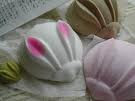
Tamausagi from Niigata 玉兎の新潟
A sweet bunny ball, like a bunny bowing to the moon. Tama-Usagi.
.................................................................................
. hoshizukiyo 星月夜 (ほしづきよ)
starlit night, night with stars as bright as the moon
*****************************
Worldwide use
*****************************
Things found on the way
tsukimi 月見 moon vieweing

. WASHOKU
tsukimi dango 月見団子 dumplings for moon viewing
. tsuki no za, 月の座 entertaining visitors for moon viewing
WKD : Temple Ginkakuji 銀閣寺
a place for moon viewing
Silver Pavilion in Kyoto
The 30 deities for every day of a lunar month
There are various lists with different deities.
. juusan banjin 三十番神 deities for every day of a month
For the day of the full moon, 15, we have
Kasuga Daimyojin, Shaka Nyorai or Amida Nyorai.
:::::::::::::::::::::::::::::::::::::::::::::::::::::::::::::::::::::::::::::::::::::::::::::::::::::
Kalanchoe tomentosa
Panda Plant, native of Madagascar
ダルマ月兎耳
Plant like the rabbit in the moon with Daruma

*****************************
HAIKU
. Matsuo Basho 松尾芭蕉 - Archives of the WKD .
月代や膝に手を置く宵の宿
tsuki shiro ya hiza ni te o oku yoi no yado
white autumn moon -
my hands rest on my knees
at the inn tonight
. . . . .
三日月の地は おぼろ也 蕎麦の花
mikazuki no chi wa oboro nari soba no hana
under the moon of the third day
the earth looks hazy -
buckwheat flowers
Basho travelled a lot to be in a famous place for the full moon night.
Here is his report from Tsuruga, where he did not see the moon after all:
月いづく鐘は沈める海の底
tsuki izuku kane wa shizumeru umi no soko
where is the full moon?
the war bell has sunk
to the bottom of the sea
Read the fascinating story I found researching about the bell at the bottom of the sea
. Basho in Kanegasaki, Tsuruga
. . . . .
蒼海の浪酒臭し今日の月
sookai no nami sake kusashi kyoo no tsuki
out of the blue sea
from waves with the fragrance of sake -
the moon tonight
Tr. Gabi Greve
blue seas
breaking waves smell of rice wine
tonight's moon
Tr. Reichhold
on the blue ocean
waves smell of rice wine -
tonight's moon
Tr. Ueda
Written in 1679 延宝7年8月
on the night of the full moon in the 8th lunar month
Basho age 36.
The moon is coming out of the sea, which looks almost like a sake cup (sakazuki 酒盃).
三井寺の門敲かばや今日の月
Mii dera no mon tatakaba ya kyoo no tsuki
I want to knock
on the gate of Mii Temple ...
the moon of tonight
. . . . .
名月や池をめぐりて夜もすがら
meigetsu ya ike o megurite yo mo sugara
harvest moon -
I walk around the pond
all night long
Matsuo Basho, Koshoo 孤松
at Basho-An, where he also wrote the famous "old pond" haiku.
source : www2.yamanashi-ken.ac.jp
. yo mo sugara - all night long .
yomosugara is a difficult to read rendering, just like mizunooto would be instead of mizu no oto.
.................................................................................
名月や門に指し来る潮頭
meigetsu ya mon ni sashi kuru shiogashira
the harvest moon -
crawling up to my gate
the rising tide
Tr. Ueda
The Basho Hut was located near the estuary of the Sumida River.
source : books.google.co.jp
full autumn moon
to my gate comes rising
crested tide
Tr. Reichhold
.................................................................................
. at Gichuuji 義仲寺 Temple Gichu-Ji - . Shiga, Otsu town. .
月見する座にうつくしき顔もなし
tsukimi suru za ni utsukushiki kao mo nashi
in this group of people
admiring the full moon
not one beautiful face
Tr. Makoto Ueda
There is another version quoted on the internet, but the last line got it wrong
all my friends
looking at the moon
what an ugly bunch
This is a hokku from the year 1701, 元禄3年8月15日
Basho's first draft of the poem was
名月や海に向かへば七小町
meigetsu ya umi ni mukaeba nana Komachi
full autumn moon -
facing the sea we have
seven Komachi beauties
. Ono no Komachi 小野 小町 .
a famous beauty of the Heian period.
and
The seven Komachi episodes about her (nana Komachi 七小町 ).
Then Basho realized that this was too sophisticated for his friends and changed his poem.
Here are the poems from that night.
月見する座にうつくしき顔もなし 芭蕉
庭の柿の葉みの虫になれ 尚白
火桶ぬる窓の手際を身にしめて 同
別當殿の古き扶持米 蕉
尾頭のめでたかりつる鹽小鯛 蕉
百家しめたる川の水上 白
- Shared by Hideo Suzuki
Joys of Japan, March 2012
moon viewing
no party without
a pretty face
Tr. Jane Reichhold
a company viewing
the moon; not one
has a beautiful face
Tr. Michael Haldane
moon viewing
not one
beautiful face
Tr. Stephen Addiss, Fumiko Y. Yamamoto
Viewing the moon -
no face in this room is as beautiful.
source : elizabeth now.blogspot
parmi la foule qui admire la lune, pas un n'a visage de beauté.
haicourtoujours.wordpress.com/

Quotes from "Basho and his Interpreters"
source : Makoto Ueda
Even the most beautiful woman cannot rival the beauty of the moon.
Here the moon is compared to a lady.
Donto
An old temple has an atmosphere of sabi. There, people who are not beautiful are viewing the moon. This is a scene well suited to haikai.
Chikurei
The people at the party were all monks or poets, and they had serene looks on their faces suggestive of their peaceful life away from the earthy mire -
Mizuho
The hokku presents the beauty of the moon without describing it.
Rohan
It is far-fetched to assume that the hokku suggests the beauty of the moon by contrasting it with the ugly faces of the people who were there. I think the poem is based on the spontaneous impression of the poet, who looked around and found no pretty face at the party. Basho discovered poetic beauty everywhere.
Shuson
In addition to admiration for the beautiful moonlight, the poem’s language contains hidden touches of loneliness and humor.
Iwata
.............................................................................
misokazuki みそか月 no moon on day 30 of a lunar month
みそか月なし千とせの杉を抱あらし
. misokazuki nashi chitose no sugi o daku arashi .
Matsuo Basho at Ise Shrine
.............................................................................
meigetsu ya chigotachi narabu doo no en
full harvest moon -
the temple acolytes are lined up
at the veranda
. Matsuo Basho 松尾芭蕉 - Archives of the WKD .
:::::::::::::::::::::::::::::::::::::::::::::::::::::::::::::::::::::::::::::::::::::::::::::::::::
Kobayashi Issa 一茶
三ケ月や梅からついと本尊へ
mikazuki ya ume kara tsui to honzon e
crescent moon -
it mooves from the plum blossoms
to the Buddha statue
Maybe Issa is sitting in a temple enjoying the first autumn moon on the third (lunar) day.
honzon is the main statue in a Buddhist temple.
夕月や萩の上行くおとし水
夕月や鍋の中にて啼田螺
夕月や流残りのきりぎりす
evening moon -
a grasshopper left
by the flood
Tr. Gabi Greve
古壁やどの穴からも秋の月
furu kabe ya dono ana kara mo aki no tsuki
old wall--
from whichever hole
autumn moon
Tr. David Lanoue
世直しの大十五夜の月見かな
yo naoshi no oojuugoya no tsukimi kana
the night of reforms
of moon viewing
on the fiftheenth
Tr. Gabi Greve
yonaoshi "to re-do the world", reform, world-healing, is also a concept of Pure Land Buddhism.
Maybe Basho is making resolutions for himself to improve his life, like we do on the Night of the New Year.
*****************************
Related words
***** . Suizenji-nori 水前寺海苔
akizuki nori 秋月苔 "autumn moon nori"
Aphanothece sacrum, seaweed
kigo for all summer
***** WKD ... MOON in all SEASONS
.SAIJIKI ... HEAVEN
Kigo for Autumn
***** . Roundness and Spirituality .
:::::::::::::::::::::::::::::::::::::::::::::::::::::::::::::::::::::::::::::::::::::::::::::::::::::
:::::::::::::::::::::::::::::::::::::::::::::::::::::::::::::::::::::::::::::::::::::::::::::::::::::
Moon in autumn (aki no tsuki)
***** Location: Japan
***** Season: Autumn
***** Category: Heaven
*****************************
Explanation
The moon is the most important kigo for autumn, just as the cherry blossoms are inseparable from spring.
In the times without electric light the full moon was an important source of illumination, giving the farmers an edge on working longer hours in the fields for the harvest.
The custom of viewing the full moon (tsukimi) in mid-autumn was introduced to Japan from China during Nara and Heian period (710-1185). There are many humanity kigo dealing with this.
. tsukimi 月見 つきみ moon viewing
..... kangetsu 観月(かんげつ)
Let us look at the moon kigo of the category HEAVEN.
aki no tsuki 秋の月 moon in autumn
The phases of the moon are often compared to a bowstring, maybe reflecting the samurai spirit of the earlier ages.
tsuki 月 (つき) moon, der Mond
This refers to the FULL MOON on the 15th day of the 8th lunar month, counting a lunar month from day one to day 30.
There are also special kigo for almost every night from the first to the thirtiest of the eighth lunar month. Some overlap and are placed for all the three months of autumn as well as only for the special night of the eighth lunar month, now in september.
The Basics
... the MOON in all SEASONS
月天心貧しき町を通りけり
. tsuki tenshin mazushiki machi o toorikeri .
Yosa Buson 与謝蕪村 and his moon haiku !
:::::::::::::::::::::::::::::::::::::::::::::::::::::::::::::::::::::::::::::::::::::::::::::::::::
kigo for early autumm
bon no tsuki 盆の月 (ぼんのつき)
full moon at the O-Bon festival
On the 15th day of the seventh lunar month.
It is still hot and people use a handfan that looks like a full moon to enjoy a small breeze.
In the Edo period, they put cut-out lanterns (kiriko tooroo 切子燈篭 ) on the shelf for the ancestors and the eaves of the home and enjoyed them in the moonlight as an offering to the ancestors.
. . . CLICK here for Photos !
. O-Bon, the Ancestor Festival and KIGO
:::::::::::::::::::::::::::::::::::::::::::::::::::::::::::::::::::::::::::::::::::::::::::::::::::
kigo for mid-autumm
This is the eighth month of the lunar calendar,
with the full autumn moon, now in September.
hatsuzuki 初月 はつづき "first moon"
hatsuzukiyo 初月夜(はつづきよ)night with the first moon
Waiting for the full moon, people started to enjoy from early in the eighth lunar month. This kigo refers to day 4, 5 and 6.
futsukazuki 二日月 (ふつかづき) moon on the second day
second-day crescent moon
..... sengetsu 繊月(せんげつ)"thin fiber moon"
..... futsuka no tsuki 二日の月(ふつかのつき)
The moon appears in the sky for a short time after sunset.
.................................................................................
mikazuki 三日月 (みかづき) moon on the third day
third-day crescent moon
mikka no tsuki 三日の月(みっかのつき)
tsuki no mayu 月の眉(つきのまゆ)moon like an eyebrow
..... mayugakizuki 眉書月(まゆがきづき)
..... mayuzuki 眉月(まゆづき)
mikkazukimayu 三日月眉(みかづきまゆ)
The moon shows up for a short time, looking in shape like an eyebrow.
This is also used as a common name for the moon of the first three days, sometimes even including the fourth day.
The brightly shining part of the moon is called MEI 明,
the dark part is HAKU 魄.
shohaku 初魄(しょはく)first "dark moon"
After the third day, this part becomes more and more visible each night.
shingetsu 新月(しんげつ) "new moon"
This is usually reserved for the 15th day full moon, but in some old poetry collections it is also used for the third-day moon.
jakugetsu 若月(じゃくげつ)"young moon"
tsuki no tsurugi 月の剣(つきのつるぎ)"moon like a sword"
gabi 蛾眉(がび) "eyebrow like a moth"
This is also an alternate name for a beautiful lady.
.................................................................................
matsuyoi 待宵 まつよい "waiting in the evening"
"evening spent waiting"
komochizuki 小望月(こもちづき)"little full moon"
The 14th day of the eighth lunar month.
The day before the full autumn moon.
Since you do not know if tomorrow might be clouded, you might as well celebrate this night, if the moon was bright and visible.
Poems with this kigo refer to a certain longing, especially in love poems.
.................................................................................

source : mingeijapan - Furoshiki
meigetsu 名月 ( めいげつ) "famous moon" harvest moon
The full moon of the eighth lunar month, now in September.
juugoya 十五夜(じゅうごや)night of the fifteenth
The deity revered on this night is Dainichi Nyorai 大日如来.
chuushuusetsu 仲秋節(ちゅうしゅうせつ)seasonal point in mid-autumn
This refers to the Chinese custom of celebrating the full moon.
People celebrated the changes of all things, now from a full moon to the waning moon.
There are many different customs in various regions of Japan to celebrate this day with special offerings and rituals.
For example sweet potatoes, edamame beans, moon-viewing dumplings and susuki reed grass.
In some areas, the day 13 is also celebrated in this way, but more often in the ninth lunar month.
imo meigetsu 芋名月(いもめいげつ) "Sweet Potato Full Moon"
Offerings of sweet potatoes were made in the evening.
kyoo no tsuki 今日の月(きょうのつき)moon of today
koyoi no tsuki 今宵の月(こよいのつき)moon of this night
..... tsukikoyoi, tsuki koyoi 、月今宵(つきこよい)
nadakaki tsuki 名高き月(なだかきつき)famous moon
..... sangoya 三五夜(さんごや)
..... sango no tsuki 三五の月(さんごのつき)
..... tanshoo no tsuki 端正の月(たんしょうのつき)
mangetsu 満月(まんげつ)full moon
meigetsu 明月(めいげつ)clear moon
with no clouds in the sky
Some old sources say :
meigetsu 名月 is only once a year, but
meigetsu 明月 is every month.
.................................................................................
mochizuki 望月(もちづき)full moon (in the east)
mochi no yo 望の夜(もちのよ)night with the moon (in the east)
MOCHI refers to the moon coming up in the opposite direction to where the sun went down, going up in the east.
"auspicious moon"
This is opposed to the phase of the moon between the sun and the earth, called SAKU 朔.
After the moonless days of SAKU, the moon becomes a "three day moon" (mikazuki).
Mochizuki is quite a common family name in Japan.

source : 松風
full moon night -
together with my grandchildren
I enjoy writing haiku
Tr. Gabi Greve
.................................................................................
ryooya 良夜 (りょうや) "good night"
night with a good view of the moon
..... ryooshoo 良宵(りょうしょう)
..... kashoo 佳宵(かしょう)
Sometimes also used for day 13 of the ninth lunar month.
On this day, the constellation "tataraboshi たたら星" (rooshuku / roshuku 婁宿) (chinese "Bond" constellation) of the 28 mansions was seen most clearly in the sky.
.................................................................................
mugetsu 無月 むげつ "no moon" moonless
kumoru meigetsu 曇る名月(くもるめいげつ)cloudy full moon
chuushuu mugetsu 仲秋無月(ちゅうしゅうむげつ)mid-autumn without moon
tsuki no kumo 月の雲(つきのくも)clouds before the moon
The night of the full moon, but it is clouded and the moon can not be seen.
ugetsu 雨月 (うげつ) moon in the rain
lit. "rain and moon"
ame meigestu 雨名月(あめめいげつ)rain and full moon
ameyo no tsuki 雨夜の月(あまよのつき)rainy night and moon
ame no tsuki 雨の月(あめのつき)moon in the rain
tsuki no ame 月の雨(つきのあめ)rain and the moon
The night of the full moon, but it is raining and the moon can not be seen.
.................................................................................
Now we come to the nights after the full moon !
I count them as "day x", refering to the counting of the days of the eighth lunar month. Rememer, this refers to the times without electricity.
izayoi 十六夜 (いざよい) moon on day 16
..... izayoo tsuki いざよう月(いざようつき)"hesitant moon"
..... nihachiya 二八夜(にはちや)
..... juurokuya 十六夜(じゅうろくや)night on the 16th day
..... kibou, kibo-u 既望(きぼう)
The moon shows up just a bit later than the full moon on the day before, as if it was hesitant (izayou, tamerau) to come back.
. - Matsuo Basho and his izayoi hokku - .
tachimachizuki 立待月 (たちまちづき) moon on day 17
"standing waiting for the moon"
..... juushichiya 十七夜(じゅうしちや)night of the 17th day
..... tachimachi 立待(たちまち)standing waiting
People would stand at the door and wait for the moon to show.
From day 17 to day 22 the deity Kannon Bosatsu 観音菩薩 is revered.
imachizuki 居待月 (いまちづき) moon on day 18
..... imachizuki 座待月(いまちづき)"sitting waiting for the moon"
..... imachi 居待(いまち)
juuhachiyazuki 十八夜月(じゅうはちやづき)
The moon shows about one hour later than the full moon on the 15 and has a larger dark part. People would sit at home in their guestroom together with friends and wait for the moon, enjoying a little party.
. . . CLICK here for Photos !
fushimachizuki 臥待月 (ふしまちづき) moon on day 19
nemachizuki 寝待月(ねまちづき)waiting for the moon laying down
fushimachi 臥待(ふしまち)
nemachi 寝待(ねまち)laying down waiting
Most people went to bed early and watched the moon through the open window of the home.
fukemachizuki 更待月 (ふけまちづき) moon on day 20
fukemachi 更待(ふけまち)staying up late waiting
inaka no tsuki 亥中の月(いなかのつき)
"moon at the hour of the wild boar"
hatsuka inaka 二十日亥中(はつかいなか)
hatsukazuki 二十日月(はつかづき)
The hour of the wild boar is about 10 at night in our days. This was considered "late at night" in the times before electricity made our nights change.
nijuusanya 二十三夜(にじゅうさんや)moon on day 23
mayonaka no tsuki 真夜中の月 (まよなかのつき) moon at midnight
There were many local groups (nijuusanya koo 二十三夜講) who had special rituals on this day, sometimes on every month, sometimes on the three nights in the first, fifth and ninth lunar month.People would gather, pray to the deity Nijusanya painted on a scoll (niijusanya sama 二十三夜様, Seishi Bosatsu 勢至菩薩), and then eat and drink and hope for good luck, easy childbirth and good health.
Seishi Bosatsu is said to posess the "rays of wisdom and sagacity" (eichi no hikari 叡智の光), which would deliver all beings from misfortune and bad luck and the moon is believed to be an incarnation of this deity.
. . . CLICK here for Photos !
Reference : Seishi Bosatsu (Mahasthamaprapta)
niijusanya sama 二十三夜様 in Akita, 田子町 Takko machi 矢田郎 Yataro
. Sake 酒 rice wine for rituals and festivals .
nijuurokuya machi 二十六夜待
waiting for the moon on day 26
According to the lunar calendar it was done in the seventh month.
Waiting for the moon was popular with the mountain ascets of the Edo period to pray for safety and prosperity.
山の端の薄紅二十六夜待
yama no ha no usu momiji nijuurokuya machi
the light pink
at the edge of the mountain - waiting
on the twenty sixth night
Hirose Naoto 広瀬直人
.................................................................................
nijuushichiya 二十七夜 moon on day 27
"Heading off to a certain place, I passed the night on a boat. At daybreak, I stuck my head out from under the thatched roof of the cabin, deeply moved by the late waning moon."
明けゆくや二十七夜も三日の月
ake yuku ya nijuushichiya mo mika no tsuki
dawn comes —
even on the night of the 27th,
a crescent moon
Tr. Barnhill
Written in 1686 貞亨3年秋.
There are no records of Basho travelling far in this year. It is not quite clear where he was when he wrote this.
. Matsuo Basho 松尾芭蕉 - Archives of the WKD .
.................................................................................
. yoiyami 宵闇 dark at night
This kigo does not simply refer to a dark night at any time, but to the nights after day 23, when the moon came up very late and the dark period of the night became much longer.
.................................................................................
. . ariakezuki 有明月(ありあけづき)dawn moon in autumn
ariakezuki 有明月 ありあけづき
ariake 有明(ありあけ)
asazuki 朝月(あさづき)"morning moon"
asatukiyo 朝月夜(あさづきよ)"dawn moon"
ake no tsuki 明の月(あけのつき)"dawn moon"
nokoru tsuki 残る月(のこるつき)"moon left behind"
Some saijiki refer to this kigo for all the three months of autumn.
:::::::::::::::::::::::::::::::::::::::::::::::::::::::::::::::::::::::::::::::::::::::::::::::::::
kigo for late autumm
nochi no tsuki 後の月 (のちのつき) "next full moon"
One month after the meigetsu, now october, celebrated on day 13 though.
futayo no tsuki 二夜の月(ふたよのつき)moon on both nights
this refers to day 13 and day 15 of the ninth lunar month.
juusanya 十三夜(じゅうさんや)moon on day 13
nagori no tsuki 名残の月(なごりのつき)"left-over moon", remembering the full moon
. Juusanya in Numazu .
mame meigetsu 豆名月(まめめいげつ)"moon with beans"
kuri meigetsu 栗名月(くりめいげつ)"moon with sweet chestnuts"
This refers to the special offerings made on this night.
. . . CLICK here for mame Photos !
. . . CLICK here for kuri Photos !
. onna meigetsu 女名月(おんなめいげつ) full moon for women
ubazuki 姥月(うばづき)full moon for old women
The Japanese liked to celebrate the autumn moon again in what is now october, choosing the two nights before the full moon for their major celebrations, just as to express their appreciation for the incomplete and for the changes in nature.
My "older sister" neighbours come together on this night, eat the beans and chestnuts and tell of the hardships of their marriage, not all like a full moon, but at least enough to be happy with their lot in life.
On this day, the deity Kokuzo Bosatsu (Kokuuzoo Bosatsu 虚空蔵菩薩) is revered.
Juusanya - The Thirteenth Night
a story by Higuchi Ichiyo (1872 - 1896)
:::::::::::::::::::::::::::::::::::::::::::::::::::::::::::::::::::::::::::::::::::::::::::::::::::
kigo for all autumm
tsuki 月 (つき) moon, der Mond
This refers to the FULL MOON on the 15th day of the 8th lunar month, counting a lunar month from the first to the thirtiest day.
.................................................................................
joogen 上弦(じょうげん) "upcoming bowstring"
waxing crescent moon
..... kami no yumihari 上の弓張(かみのゆみはり)
..... joogen no tsuki 上弦の月(じょうげんのつき)
..... noborizuki 上り月 のぼりづき
moon in its first quarter
Usually on the 7th and 8th day.
kagen 下弦(かげん)"downgoing bowstring"
waning moon
..... げげん
..... kagen no tsuki 下弦の月(かげんのつき)
..... kudarizuki 降り月 くだりづき
..... kudarizuki 下り月(くだりづき)
..... shimo no yumihari 下の弓張(しものゆみはり)
Usually on the 22th and 23 day.
Together they comprize the months where the moon looks like this
yumiharizuki 弓張月(ゆみはりづき) "bow-stretched moon"
..... katawarezuki 片割月(かたわれづき)"moon like a drawn bow"
yumihari 弦(ゆみはり)"full drawn bow"
弦月(げんげつ)half moon, half-moon, halfmoon
lit. "bowstring moon"
..... hangetsu 半月(はんげつ)Halbmond
tsuki no yumi 月の弓(つきのゆみ)moon like a (Japanese) bow
tsuki no fune 月の舟(つきのふね / 月の船)moon like a boat
.................................................................................
noborizuki 上り月(のぼりづき)waxing moon
(lit. "moon going up")
from the half moon-position toward the full moon.
kudarizuki 下り月(くだりづき)waning moon
(lit. moon going down")
From the full moon position on the 15th to the 30th.
mochikudari 望くだり(もちくだり)moon going down
(at the opposite direction than the sun)
.................................................................................
. ariakezuki 有明月(ありあけづき)dawn moon in autumn
..... ariake 有明(ありあけ)
asazukuyo 朝月夜(あさづくよ)moon at dawn
hiru no tsuki 昼の月(ひるのつき)moon at midday, daymoon
yuuzuki 夕月(ゆうづき)moon in the evening
..... yuuzukiyo 夕月夜(ゆうづきよ)
yoizuki 宵月(よいづき)evening moon
..... yoizukiyo 宵月夜(よいづきよ)
From day 2 until day 7 or 8, when the moon looks like a drawn bow in the late autumn evening. It was a well loved theme for poetry since olden times.
.................................................................................
yokkazuki 四日月(よっかづき)moon on day 4
itsukazuki 五日月(いつかづき)moon on day 5
yookazuki 八日月(ようかづき)moon on day 8
tookazuki 十日月(とおかづき)moon on day 10
hatsukazuki 二十日月(はつかづき)moon on day 20
tsuki no de 月の出(つきので)moonrise, Mondaufgang
tsuki no iri 月の入(つきのいり)moonset, Monduntergang
..... irusa no tsuki 入るさの月(いるさのつき)
tsuki noboru 月上る(つきのぼる)moon going up
tsuki wataru 月渡る(つきわたる)moon passing over
tsuku katamuku 月傾く(つきかたむく)moon bending down
tsuki otsu 月落つ(つきおつ)moon going down
tsuki fukuru 月更くる(つきふくる)moon coming late
osozuki 遅月(おそづき)late moon
tsuki no aki 月の秋(つきのあき)"autumn of the moon"
tsukiyo 月夜(つきよ)night with a moon
..... tsukiyomi 月よみ(つきよみ)
tsukiyogarasu 月夜烏(つきよがらす)crow crowing in a moon night
(Also used for a person who enjoys nightlife like a karasu.)
.................................................................................
tsuki no wa 月の輪(つきのわ)circle around the moon
tsuki no kasa 月の暈(つきのかさ)halo around the moon
gengetsu 幻月(げんげつ)"moon illusion"
When the moon is close to the horizon, almost white, and looks like having one more moon on each side. This happens when ice crystals in the air break the moonlight.
This is related to a halo around the moon.
.................................................................................
tsukishiro 月白(つきしろ)"moon white"
..... tsukishiro 月代 (つきしろ)
When the early moon is coming over the eastern horizon and all is still covered in a kind of white vale.
.................................................................................
kooga 姮娥(こうが)"moon fairy Koga"
..... jooga 嫦娥(じょうが)
According to Chinese legends, the beautiful Jooga (Kooga) (Joga/Koga) shows up in a full moon night. This legend refers to a princess (or sage mountain woman) who run away from an unwanted lover and hid in the moon.
Or she stole the medicine of eternal life from the Heavenly Mother in the West and took flight to the moon.
. . . CLICK here for Photos !
.................................................................................
More names for the full moon, reflecting human allusions and resemblances and comparing the moon with other things.
tsuki no kaeru 月の蟾(つきのかえる)toad in the moon
tsuki no nezumi 月の鼠(つきのねずみ)mouse in the moon
tsuki no katsura 月の桂(つきのかつら)katsura tree in the moon
tsuki no miyako 月の都(つきのみやこ) capital in the moon
(referring to Kyoto)
getsukyuuden 月宮殿(げつきゅうでん)palace in the moon
tsuki no kagami 月の鏡(つきのかがみ)mirror of the moon
tsuki no ken 月の剣(つきのけん)sword of the moon
tsuki no koori 月の氷(つきのこおり)ice of the moon
.................................................................................

tsuki no usagi 月の兎(つきのうさぎ)rabbit in the moon
gyokuto 玉兎(ぎょくと)"treasure rabbit"
Click on the image to learn why the hare is pounding rice in the moon !
Tamausagi from Niigata 玉兎の新潟
A sweet bunny ball, like a bunny bowing to the moon. Tama-Usagi.
.................................................................................
. hoshizukiyo 星月夜 (ほしづきよ)
starlit night, night with stars as bright as the moon
*****************************
Worldwide use
*****************************
Things found on the way
tsukimi 月見 moon vieweing
. WASHOKU
tsukimi dango 月見団子 dumplings for moon viewing
. tsuki no za, 月の座 entertaining visitors for moon viewing
WKD : Temple Ginkakuji 銀閣寺
a place for moon viewing
Silver Pavilion in Kyoto
The 30 deities for every day of a lunar month
There are various lists with different deities.
. juusan banjin 三十番神 deities for every day of a month
For the day of the full moon, 15, we have
Kasuga Daimyojin, Shaka Nyorai or Amida Nyorai.
:::::::::::::::::::::::::::::::::::::::::::::::::::::::::::::::::::::::::::::::::::::::::::::::::::::
Kalanchoe tomentosa
Panda Plant, native of Madagascar
ダルマ月兎耳
Plant like the rabbit in the moon with Daruma
*****************************
HAIKU
. Matsuo Basho 松尾芭蕉 - Archives of the WKD .
月代や膝に手を置く宵の宿
tsuki shiro ya hiza ni te o oku yoi no yado
white autumn moon -
my hands rest on my knees
at the inn tonight
. . . . .
三日月の地は おぼろ也 蕎麦の花
mikazuki no chi wa oboro nari soba no hana
under the moon of the third day
the earth looks hazy -
buckwheat flowers
Basho travelled a lot to be in a famous place for the full moon night.
Here is his report from Tsuruga, where he did not see the moon after all:
月いづく鐘は沈める海の底
tsuki izuku kane wa shizumeru umi no soko
where is the full moon?
the war bell has sunk
to the bottom of the sea
Read the fascinating story I found researching about the bell at the bottom of the sea
. Basho in Kanegasaki, Tsuruga
. . . . .
蒼海の浪酒臭し今日の月
sookai no nami sake kusashi kyoo no tsuki
out of the blue sea
from waves with the fragrance of sake -
the moon tonight
Tr. Gabi Greve
blue seas
breaking waves smell of rice wine
tonight's moon
Tr. Reichhold
on the blue ocean
waves smell of rice wine -
tonight's moon
Tr. Ueda
Written in 1679 延宝7年8月
on the night of the full moon in the 8th lunar month
Basho age 36.
The moon is coming out of the sea, which looks almost like a sake cup (sakazuki 酒盃).
三井寺の門敲かばや今日の月
Mii dera no mon tatakaba ya kyoo no tsuki
I want to knock
on the gate of Mii Temple ...
the moon of tonight
. . . . .
名月や池をめぐりて夜もすがら
meigetsu ya ike o megurite yo mo sugara
harvest moon -
I walk around the pond
all night long
Matsuo Basho, Koshoo 孤松
at Basho-An, where he also wrote the famous "old pond" haiku.
source : www2.yamanashi-ken.ac.jp
. yo mo sugara - all night long .
yomosugara is a difficult to read rendering, just like mizunooto would be instead of mizu no oto.
.................................................................................
名月や門に指し来る潮頭
meigetsu ya mon ni sashi kuru shiogashira
the harvest moon -
crawling up to my gate
the rising tide
Tr. Ueda
The Basho Hut was located near the estuary of the Sumida River.
source : books.google.co.jp
full autumn moon
to my gate comes rising
crested tide
Tr. Reichhold
.................................................................................
. at Gichuuji 義仲寺 Temple Gichu-Ji - . Shiga, Otsu town. .
月見する座にうつくしき顔もなし
tsukimi suru za ni utsukushiki kao mo nashi
in this group of people
admiring the full moon
not one beautiful face
Tr. Makoto Ueda
There is another version quoted on the internet, but the last line got it wrong
all my friends
looking at the moon
what an ugly bunch
This is a hokku from the year 1701, 元禄3年8月15日
Basho's first draft of the poem was
名月や海に向かへば七小町
meigetsu ya umi ni mukaeba nana Komachi
full autumn moon -
facing the sea we have
seven Komachi beauties
. Ono no Komachi 小野 小町 .
a famous beauty of the Heian period.
and
The seven Komachi episodes about her (nana Komachi 七小町 ).
Then Basho realized that this was too sophisticated for his friends and changed his poem.
Here are the poems from that night.
月見する座にうつくしき顔もなし 芭蕉
庭の柿の葉みの虫になれ 尚白
火桶ぬる窓の手際を身にしめて 同
別當殿の古き扶持米 蕉
尾頭のめでたかりつる鹽小鯛 蕉
百家しめたる川の水上 白
- Shared by Hideo Suzuki
Joys of Japan, March 2012
moon viewing
no party without
a pretty face
Tr. Jane Reichhold
a company viewing
the moon; not one
has a beautiful face
Tr. Michael Haldane
moon viewing
not one
beautiful face
Tr. Stephen Addiss, Fumiko Y. Yamamoto
Viewing the moon -
no face in this room is as beautiful.
source : elizabeth now.blogspot
parmi la foule qui admire la lune, pas un n'a visage de beauté.
haicourtoujours.wordpress.com/
Quotes from "Basho and his Interpreters"
source : Makoto Ueda
Even the most beautiful woman cannot rival the beauty of the moon.
Here the moon is compared to a lady.
Donto
An old temple has an atmosphere of sabi. There, people who are not beautiful are viewing the moon. This is a scene well suited to haikai.
Chikurei
The people at the party were all monks or poets, and they had serene looks on their faces suggestive of their peaceful life away from the earthy mire -
Mizuho
The hokku presents the beauty of the moon without describing it.
Rohan
It is far-fetched to assume that the hokku suggests the beauty of the moon by contrasting it with the ugly faces of the people who were there. I think the poem is based on the spontaneous impression of the poet, who looked around and found no pretty face at the party. Basho discovered poetic beauty everywhere.
Shuson
In addition to admiration for the beautiful moonlight, the poem’s language contains hidden touches of loneliness and humor.
Iwata
.............................................................................
misokazuki みそか月 no moon on day 30 of a lunar month
みそか月なし千とせの杉を抱あらし
. misokazuki nashi chitose no sugi o daku arashi .
Matsuo Basho at Ise Shrine
.............................................................................
meigetsu ya chigotachi narabu doo no en
full harvest moon -
the temple acolytes are lined up
at the veranda
. Matsuo Basho 松尾芭蕉 - Archives of the WKD .
:::::::::::::::::::::::::::::::::::::::::::::::::::::::::::::::::::::::::::::::::::::::::::::::::::
Kobayashi Issa 一茶
三ケ月や梅からついと本尊へ
mikazuki ya ume kara tsui to honzon e
crescent moon -
it mooves from the plum blossoms
to the Buddha statue
Maybe Issa is sitting in a temple enjoying the first autumn moon on the third (lunar) day.
honzon is the main statue in a Buddhist temple.
夕月や萩の上行くおとし水
夕月や鍋の中にて啼田螺
夕月や流残りのきりぎりす
evening moon -
a grasshopper left
by the flood
Tr. Gabi Greve
古壁やどの穴からも秋の月
furu kabe ya dono ana kara mo aki no tsuki
old wall--
from whichever hole
autumn moon
Tr. David Lanoue
世直しの大十五夜の月見かな
yo naoshi no oojuugoya no tsukimi kana
the night of reforms
of moon viewing
on the fiftheenth
Tr. Gabi Greve
yonaoshi "to re-do the world", reform, world-healing, is also a concept of Pure Land Buddhism.
Maybe Basho is making resolutions for himself to improve his life, like we do on the Night of the New Year.
*****************************
Related words
***** . Suizenji-nori 水前寺海苔
akizuki nori 秋月苔 "autumn moon nori"
Aphanothece sacrum, seaweed
kigo for all summer
***** WKD ... MOON in all SEASONS
.SAIJIKI ... HEAVEN
Kigo for Autumn
***** . Roundness and Spirituality .
:::::::::::::::::::::::::::::::::::::::::::::::::::::::::::::::::::::::::::::::::::::::::::::::::::::
1/02/2010
BACKUP SUMMER Humanity
:::::::::::::::::::::::::::::::::::::::::::::::::::::::::::::::::::::::::::::::::::::::::::::::::::::
BACKUP from the YAHOO LIST
http://groups.yahoo.com/group/kigohotline/links/SAIJIKI_____all_kigo_from_JAPAN_001239525509/02_____SUMMER_001239525638/04_____Humanity__daily_life__livelihood__001239589465/
Links > SAIJIKI ... All kigo from the WKD World Kigo Database > 02 ... SUMMER > 04 ... Humanity, daily life, livelihood
Name
Creator
AAA Humanity and Haiku . . . SUMMER The Basics . . . / Use your own browser to search for a keyeword in the LIST below ! http://wkdkigodatabase03.blogspot.com/2009/05/humanity.html
worldkigo
air conditioning (reiboo) room cooler and more http://worldkigodatabase.blogspot.com/2010/05/air-conditioning-reiboo.html
worldkigo
antidote (dokukeshi) for summer ailments more MEDICINE kigo http://wkdhaikutopics.blogspot.com/2007/04/chinese-medicine-kanpo.html
worldkigo
balcony, veranda, terrace (rodai) http://wkdkigodatabase03.blogspot.com/2010/01/living-at-home-interior.html
worldkigo
bamboo planting (take uu) an old Chinese custom, http://worldkigodatabase.blogspot.com/2005/02/bamboo-take.html
worldkigo
bamboo wife (chikufujin) cool things for the bed http://wkdkigodatabase03.blogspot.com/2007/05/bamboo-wife-chiku-fujin.html
worldkigo
barefoot, bare feet (hadashi, suashi) barfuss http://worldkigodatabase.blogspot.com/2010/03/naked-hadaka.html
worldkigo
basin, shallow basin (suiban) for flowers and stones arrangements to make us feel cool http://worldkigodatabase.blogspot.com/2005/09/ikebana.html
worldkigo
basket for cooked rice (meshizaru, meshikago) more RICE food kigo http://washokufood.blogspot.com/2008/08/rice-reis.html
worldkigo
bathing suit (mizugi) more BATHING kigo http://wkdkigodatabase03.blogspot.com/2007/03/summer-robes-natsu-goromo.html
worldkigo
beach life a KIGO list. surfing, swimming, diving for pleasure http://wkdkigodatabase03.blogspot.com/2007/03/beach.html
worldkigo
birdlime making (torimochitsuku, torimochi tsuku) from the bark of Ilex integra http://wkdkigodatabase03.blogspot.com/2010/05/farmers-work-in-summer.html
worldkigo
blinds (sudare), rattan chair (too isu) and more cooling things in your home http://worldkigo2005.blogspot.com/2006/07/blinds-bamboo-blind-sudare.html
worldkigo
boats and ships in summer, cruising (funaasobi) a KIGO list. rowboat, yacht http://wkdkigodatabase03.blogspot.com/2007/12/ship-boat-fune.html
worldkigo
branches cut back (eda harau) more GARDEN information http://darumamuseumgallery.blogspot.com/2007/05/japanese-gardens.html
worldkigo
brazier in summer (natsu hibachi) more HIBACHI kigo http://darumasan.blogspot.com/2005/11/hibachi.html
worldkigo
bugs and insects dispelled (mushi kagari and others) various means are used to get rid of them (mushi okuri, seeing off the bugs and beetles in a festival) http://worldkigo2005.blogspot.com/2005/06/fly-swatter.html
worldkigo
calabash stripes (kanpyoo) kampyo and more Lagenaria siceraria var. hispida http://washokufood.blogspot.com/2009/05/summer-vegetables.html
worldkigo
camp (kyanpu), tent (tento) camping KIGO list http://wkdkigodatabase03.blogspot.com/2009/07/camping-camp.html
worldkigo
children taking a bath in a bathtub (gyoosui) more WATER kigo http://haikutopics.blogspot.com/2007/01/water-mizu.html
worldkigo
children taking a bath in the tub outside(gyoozui) http://haikutopics.blogspot.com/2007/01/water-mizu.html
worldkigo
coolness in the evening breeze (yusuzumi) a KIGO list of feeling cool, riverside veranda and more http://worldkigo2005.blogspot.com/2005/03/coolness-suzushi.html
worldkigo
cormorant fishing (ukai) a KIGO list http://europasaijiki.blogspot.com/2007/07/cormorant.html
worldkigo
cows / bulls for light ploughing (takaki ushi) http://wkdkigodatabase03.blogspot.com/2010/05/farmers-work-in-summer.html
worldkigo
cows and bulls are washed (ushi arau) more things WASHED in summer http://wkdkigodatabase03.blogspot.com/2009/12/washing-arau.html
worldkigo
cut glass (kiriko, kattogurasu) to serve cool food and drinks http://darumasan.blogspot.com/2010/04/kiriko-cut-glass.html
worldkigo
disease and illness : a KIGO list summer cold, heat stroke, prickley heat, diarrhoea, loosing weight in summer, dysentery, cholera, beriberi, malaria, athlete's foot, typhus, sunstroke, http://wkdkigodatabase03.blogspot.com/2008/02/common-cold-and-flu.html
worldkigo
door curtain for summer (natsu noren) more about DOOR CURTAIN http://darumasan.blogspot.com/2005/03/noren-door-curtains.html
worldkigo
drinks for summer cold drinks, beer, sake ... a LONG kigo list http://washokufood.blogspot.com/2008_06_01_archive.html
worldkigo
drying out the bugs (mushiboshi, mushi-boshi) doyoo-boshi (drying during the dog-days) http://worldkigodatabase.blogspot.com/2005/04/dog-days-doyoo.html
worldkigo
fan (ogi, uchiwa), folding fan, round hand fan, ceiling fan folding fan ... many ways to keep cool in summer http://worldkigodatabase.blogspot.com/2005/06/fan-oogi-and-uchiwa.html
worldkigo
fertilizer, green fertilizer (ryokuhi, kusagoe) more about Farmers Work in Summer http://wkdkigodatabase03.blogspot.com/2010/05/farmers-work-in-summer.html
worldkigo
fireflies vendor (hotaru uri) chasing fireflies (hotarugari) and many more fireflies KIGO http://worldkigo2005.blogspot.com/2005/06/fireflies-hotaru-05.html
worldkigo
fireworks display (hanabi) a KIGO list http://worldkigodatabase.blogspot.com/2005/06/firework-display-hanabi.html
worldkigo
fishing in summer, all kinds of fish, all kinds of local methods a . long . KIGO list http://wkdkigodatabase03.blogspot.com/2010/01/fishing-kigo.html
worldkigo
floating dolls (uki ningyoo) more DOLL kigo http://wkdkigodatabase03.blogspot.com/2009/02/new-year-performances.html
worldkigo
flowers under water (suichuuka) ways to entertain visitors with coolness http://wkdkigodatabase03.blogspot.com/2010/06/summer-entertainment.html
worldkigo
fly squatter (hae tataki) and more tools to ward off flies and mosquitoes, mosquito coils, ... katori senkoo http://worldkigo2005.blogspot.com/2005/06/fly-swatter.html
worldkigo
folding screen from reed (yoshi byoobu) more cool things from REED http://worldkigo2005.blogspot.com/2006/07/blinds-bamboo-blind-sudare.html
worldkigo
food of Summer SAIJIKI http://washokufood.blogspot.com/2008_01_01_archive.html
worldkigo
fountain (funsui) Springbrunnen. and mechanical water devices (mizukarakuri) http://wkdkigodatabase03.blogspot.com/2009/06/fountain-funsui.html
worldkigo
fragracne bag (nioibukuro). kakekoo, ku-no-e-koo ... more incense used in summer kigo http://darumamuseum.blogspot.com/2009/08/nioibukuro-sachet.html
worldkigo
fruit packed in paper bags (fukurokake) more FRUIT information http://washokufood.blogspot.com/2008/07/kudamono-fruits-obst.html
worldkigo
fusuma sliding doors taken off (fusuma hazusu) let the wind in ... kazatooshi http://darumamuseum.blogspot.com/2010/02/fusuma.html
worldkigo
futon for summer, summer bedding (natsu futon) more FUTON kigo http://worldkigodatabase.blogspot.com/2010/04/futon-bedding.html
worldkigo
geta sandals for rice planting (ta geta) more GETA information http://darumasan.blogspot.com/2005/04/geta-sandals.html
worldkigo
gloves for summer (natsu tebukuro) more GLOVES kigo http://wkdkigodatabase03.blogspot.com/2007/03/kimono.html
worldkigo
grafting plants ... camellia and chrysanthemum (kiku sasu, tsubaki sasu) http://wkdkigodatabase03.blogspot.com/2010/05/planting-in-summer.html
worldkigo
hair washing (kami arau) more WASHING kigo http://wkdkigodatabase03.blogspot.com/2009/12/washing-arau.html
worldkigo
hakama trousers for summer (natsubakama) more trouser-skirt KIGO http://wkdkigodatabase03.blogspot.com/2007/03/summer-robes-natsu-goromo.html
worldkigo
hammock (hanmokku) http://worldkigo2005.blogspot.com/2005/08/hammock.html
worldkigo
hanger for airing robes (emondake) pole for airing cloths (emonzao) http://wkdkigodatabase03.blogspot.com/2008/07/sweat-ase.html
worldkigo
haori coat for summer (natsubaori) more COAT kigo http://wkdkigodatabase03.blogspot.com/2007/03/summer-robes-natsu-goromo.html
worldkigo
hay (hoshikusa). Heu a KIGO list. making hay http://wkdkigodatabase03.blogspot.com/2010/05/farmers-work-in-summer.html
worldkigo
heat, warding off the heat (shokibarai) http://worldkigodatabase.blogspot.com/2006/07/summer-natsu.html
worldkigo
hemp harvesting (asa karu) Cannabis sativa more HEMP kigo http://worldkigodatabase.blogspot.com/2010/06/hemp-asa.html
worldkigo
home, preparations for living in summer a KIGO list http://wkdkigodatabase03.blogspot.com/2010/01/living-at-home-interior.html
worldkigo
horse for light plowing (takaki uma) more about Farmers Work in Summer http://wkdkigodatabase03.blogspot.com/2010/05/farmers-work-in-summer.html
worldkigo
horses cooled (uma hiyasu) more HORSE kigo http://worldkigo2005.blogspot.com/2006/08/horse-uma.html
worldkigo
ice flowers (hanagoori) for decoration more about COOLNESS in summer http://worldkigo2005.blogspot.com/2005/03/coolness-suzushi.html
worldkigo
ice for food in summer, icecream, soft cream icebox with real ice and many more http://wkdkigodatabase03.blogspot.com/2009/10/ice-cutting.html
worldkigo
indigo harvest (ai karu) more about INDIGO http://wkdkigodatabase03.blogspot.com/2007/11/numbers-used-in-kigo.html
worldkigo
insect collecting (konchuu saishuu) and insects as food http://washokufood.blogspot.com/2008/04/konchuu-ryoori-insects.html
worldkigo
iris bath (shoobuyu) night before the Boy's Festival http://wkdkigodatabase03.blogspot.com/2009/12/bath-furo.html
worldkigo
joruri puppet theater on a cool evening (suzumi jooruri) more about Bunraku and Joruri performances http://washokufood.blogspot.com/2009/07/bunraku-and-joruri.html
worldkigo
kyogen performance with water (mizu kyoogen) more about Kabuki and Kyogen http://wkdfestivalsaijiki.blogspot.com/2007/04/kabuki.html
worldkigo
lace (reesu), knitting lace http://wkdkigodatabase03.blogspot.com/2007/03/summer-robes-natsu-goromo.html
worldkigo
lamp, lamplight in summer (natsu tomoshi) more LAMP kigo http://wkdkigodatabase03.blogspot.com/2007/10/lamp-light-shuutoo.html
worldkigo
landscape garden miniatur (hakoniwa) in a box or basin, as cool decoration http://worldkigodatabase.blogspot.com/2005/09/ikebana.html
worldkigo
lanterns revolving (soomatoo) decorated revolving lamps (mawaridooroo) http://worldkigo2005.blogspot.com/2005/12/light-offerings-afloat-tooroo-nagashi.html
worldkigo
laquer collecting (urushi kaku) more LAQUER tree kigo http://wkdkigodatabase03.blogspot.com/2009/06/laquer-tree.html
worldkigo
lawn mowing (shibakari) lawn mower (shibakariki ) . more LAWN information http://wkdkigodatabase03.blogspot.com/2010/05/farmers-work-in-summer.html
worldkigo
lice powder (nomitoriko) made from the insect powder plant http://worldkigodatabase.blogspot.com/2006/07/summer-natsu.html
worldkigo
lotus viewing (hasumi, hasu mi) more LOTUS kigo http://happyhaiku.blogspot.com/2005/06/lotus.html
worldkigo
makomo rice harvest (makomo karu) more abuot makomo wild rice http://wkdkigodatabase03.blogspot.com/2007/12/ship-boat-fune.html
worldkigo
medicine used in summer, medicine vendors of the Edo period a KIGO list. traditional Chinese medicine http://worldkigodatabase.blogspot.com/2006/07/summer-natsu.html
worldkigo
mosquito net (kaya) . various types of Old Japan and other MOSQUITO - related kigo for summer http://worldkigodatabase.blogspot.com/2006/01/mosquitoes-ka.html
worldkigo
mothball boat (shoonoobune) more about toys for children http://wkdkigodatabase03.blogspot.com/2010/06/summer-entertainment.html
worldkigo
mowing, cutting grass (kusakari) a . long . KIGO list http://wkdkigodatabase03.blogspot.com/2010/05/farmers-work-in-summer.html
worldkigo
naked (hadaka) stripped to the waist (hadanugi) http://worldkigodatabase.blogspot.com/2010/03/naked-hadaka.html
worldkigo
nap (hirune) Mittagsschlaf http://happyhaiku.blogspot.com/2006/06/mittagsschlaf.html
worldkigo
night game (naitaa) more BASEBALL kigo http://worldkigo2005.blogspot.com/2005/02/baseball-playoff.html
worldkigo
night stories (yobanashi) and tatebanko diorama illustrations http://darumasan.blogspot.com/2006/08/daruma-yobanashi.html
worldkigo
noh performance at night (yonoo, takagi noo) more about Noh performances http://wkdhaikutopics.blogspot.com/2007/03/yugen-yuugen.html
worldkigo
noh performance at night, takagi noo 薪能 takagi noo, takagi no, takaginoh http://wkdhaikutopics.blogspot.com/2007/03/yugen-yuugen.html
worldkigo
outdoor performances, music, theater, ballet (yagai ensoo, yagai eiga ... ) http://wkdkigodatabase03.blogspot.com/2010/06/summer-entertainment.html
worldkigo
panama hat, kankan hat more HAT kigo http://haikutopics.blogspot.com/2006/05/hat-kasa.html
worldkigo
parasol and umbrella (higasa) more UMBRELLA kigo http://kenyasaijiki.blogspot.com/2006/09/umbrella.html
worldkigo
peppermint harvest (hakka karu) peppermint from Hokkaido http://washokufood.blogspot.com/2008/05/hokkaido.html
worldkigo
perfume (koosui), cologne (oodikoron) more about FRAGRANCE and kigo http://haikutopics.blogspot.com/2006/09/smell-and-fragrance.html
worldkigo
pillow from bamboo (takemakura) pillows to keep cool in summer, a KIGO list http://wkdkigodatabase03.blogspot.com/2007/05/bamboo-wife-chiku-fujin.html
worldkigo
planting in summer millet, beans, eggplants, sweet potatoes, sesame, cotton http://wkdkigodatabase03.blogspot.com/2010/05/planting-in-summer.html
worldkigo
planting rice, taue and related KIGO http://worldkigo2005.blogspot.com/2005/06/fields-paddies-ta.html
worldkigo
rain break (ame yasumi) giving thanks for the rain after a dry spell http://wkdkigodatabase03.blogspot.com/2010/05/farmers-work-in-summer.html
worldkigo
rain ritual, rain prayer (amagoi) for rain to stop or for rain to fall ... rain is important to the rice farmers http://worldkigo2005.blogspot.com/2006/06/rain-rituals-amagoi-05.html
worldkigo
rapeseed harvest (natane karu) more RAPESEED information http://wkdkigodatabase03.blogspot.com/2007/04/rape-blossoms-na-no-hana.html
worldkigo
rattan chair (too isu) http://worldkigo2005.blogspot.com/2006/07/blinds-bamboo-blind-sudare.html
worldkigo
reed flute (kusabue), leaf flute more FLUTE kigo http://haikutopics.blogspot.com/2006/11/flute-fue.html
worldkigo
refrigerator (reizooko) a KIGO list, ice-cutting in summer http://wkdkigodatabase03.blogspot.com/2009/10/ice-cutting.html
worldkigo
rice planting (taue, ta-ue) a long KIGO list. The most important activity for rice farmers http://worldkigo2005.blogspot.com/2005/06/fields-paddies-ta.html
worldkigo
rice planting comes to an end with a ceremony (sanaburi) taue jimai http://wkdkigodatabase03.blogspot.com/2010/05/farmers-work-in-summer.html
worldkigo
rice planting women (saotome) more WOMAN kigo http://wkdkigodatabase03.blogspot.com/2007/12/woman-and-haiku.html
worldkigo
room near the spring (izumidono), room near the waterfall (takidono) room for fishing (tsuridono) . Palace architecture and related KIGO http://darumamuseumgallery.blogspot.com/2008/04/higashiyama-culture.html
worldkigo
rushes harvest (i karu), igusa drying rushes (i hosu) http://wkdkigodatabase03.blogspot.com/2009/10/winter-farmers-work.html
worldkigo
sash for summer (natsu obi) http://haikutopics.blogspot.com/2006/06/kyoshi-natsu-obi.html
worldkigo
school life in summer, summer camp, summer holidays SCHOOL LIFE in all seasons http://wkdkigodatabase03.blogspot.com/2010/02/school-life-in-all-seasons.html
worldkigo
screen door (amido) screen window to keep out the bugs http://wkdkigodatabase03.blogspot.com/2010/01/living-at-home-interior.html
worldkigo
seaweed in summer agar-agar, funori, kombu (konbu) and more http://haikutopics.blogspot.com/2006/06/seaweed-kaisoo.html
worldkigo
sedge harvest (suge karu) drying sedge (suge hosu) http://wkdkigodatabase03.blogspot.com/2010/05/farmers-work-in-summer.html
worldkigo
seedlings vendor (nae-uri) of vegetables and summer flowers http://wkdkigodatabase03.blogspot.com/2010/02/seeds-in-spring.html
worldkigo
shirt for summer (natsu shatsu) more SHIRT kigo. Aloha shirts and more http://wkdkigodatabase03.blogspot.com/2007/03/summer-robes-natsu-goromo.html
worldkigo
shoes, white shoes (shirogutsu) http://wkdkigodatabase03.blogspot.com/2007/03/kimono.html
worldkigo
shower, taking a shower (shawaa) http://haikutopics.blogspot.com/2007/01/water-mizu.html
worldkigo
silk and cocoons in summer, spinning etc. a . long . KIGO list http://wkdkigodatabase03.blogspot.com/2007/08/silk-kinu.html
worldkigo
silk floss is new (shin mawata) picking silk floss, Seidenwatte http://wkdkigodatabase03.blogspot.com/2009/08/cotton-wata.html
worldkigo
sitting mat (goza) more MATS used in Japan http://worldkigo2005.blogspot.com/2006/07/blinds-bamboo-blind-sudare.html
worldkigo
sitting room in summer (natsu zashiki) http://worldkigo2005.blogspot.com/2006/07/blinds-bamboo-blind-sudare.html
worldkigo
skiing in summer (natsu sukii) http://haikutopics.blogspot.com/2006/06/mountain-yama.html
worldkigo
sleeping outside (soto-ne) more SLEEP kigo for all seasons http://haikuandhappiness.blogspot.com/2007/03/sleepy-in-spring.html
worldkigo
slump in summer (natsugare) more BUSINESS and WORK related kigo http://wkdkigodatabase03.blogspot.com/2010/01/new-year-begins.html
worldkigo
socks, Tabi socks for summer (natsu tabi) more about TABI socks http://darumamuseum.blogspot.com/2009/08/socks-and-tabi.html
worldkigo
straw flute (mugiwara bue) straw kigo http://wkdkigodatabase03.blogspot.com/2009/10/straw-wara.html
worldkigo
straw hat (mugiwara booshi) more HATS (kasa) for summer http://haikutopics.blogspot.com/2006/05/hat-kasa.html
worldkigo
summer robes, changing to ... (koromogae) thin robes and kimono for summer . a KIGO list http://wkdkigodatabase03.blogspot.com/2007/03/summer-robes-natsu-goromo.html
worldkigo
summering (hisho) Sommerfrische a KIGO list http://worldkigodatabase.blogspot.com/2006/07/summer-natsu.html
worldkigo
sunburn (hiyake) and sunscreen (hiyakedome) more SUMMER kigo http://worldkigodatabase.blogspot.com/2006/07/summer-natsu.html
worldkigo
sunglasses (sangurasu) Sonnenbrille http://wkdkigodatabase03.blogspot.com/2007/03/summer-robes-natsu-goromo.html
worldkigo
surfing, waterskiing and more things to enjoy on the beach http://wkdkigodatabase03.blogspot.com/2007/03/beach.html
worldkigo
sweat (ase) and many related kigo more SWEAT kigo. prickly heat ... http://wkdkigodatabase03.blogspot.com/2008/07/sweat-ase.html
worldkigo
sweat powder (tenkafun) ase shirazu "without sweat", natural medicine http://worldkigodatabase.blogspot.com/2006/07/summer-natsu.html
worldkigo
sweat towel (ase nugui, tenugui) more wipers for sweat in summer. a KIGO list http://wkdkigodatabase03.blogspot.com/2008/07/sweat-ase.html
worldkigo
sweets, wagashi SAIJIKI SUMMER http://washokufood.blogspot.com/2008_02_01_archive.html
worldkigo
tea ceremony SAIJIKI http://worldkigo2005.blogspot.com/2006/05/tea-ceremony-saijiki.html
worldkigo
tea ceremony in summer (natsu cha no yu) a KIGO list. morning tea, tea cup for summer ... http://worldkigo2005.blogspot.com/2006/05/tea-ceremony-saijiki.html
worldkigo
tin pot (suzu no hachi) tin plate (suzu no sara) to make the food look cool http://darumasan.blogspot.com/2010/04/hachi-small-pot.html
worldkigo
trenches cleaning (mizo sarae) weirs and dam cleaning http://wkdkigodatabase03.blogspot.com/2007/04/well-cleaning-sarashi-i.html
worldkigo
veranda enjoyment in the evening (yuuhashi-i) http://worldkigo2005.blogspot.com/2010/03/evening-yuube-yoi.html
worldkigo
visit after a water damage (mizu mimai) after a typhoon http://worldkigodatabase.blogspot.com/2006/08/typhoon-hurricane.html
worldkigo
washing in the evening (yosusugi ) http://haikutopics.blogspot.com/2007/01/water-mizu.html
worldkigo
water fighting (mizuarasoi) during a dry spell a KIGO list. stealing water, supervising the water distribution and more http://wkdkigodatabase03.blogspot.com/2010/05/farmers-work-in-summer.html
worldkigo
water pistol (mizudeppoo) enjoying the WATER in summer http://wkdkigodatabase03.blogspot.com/2007/03/beach.html
worldkigo
water sprinkling (uchimizu) to cool the ground http://worldkigodatabase.blogspot.com/2006/07/sprinkling-water-uchimizu.html
worldkigo
water vendor (mizu-uri, mizuuri) an important job in Edo http://haikutopics.blogspot.com/2007/01/water-mizu.html
worldkigo
water warmed by sunshine (hinatamizu) more WATER kigo http://haikutopics.blogspot.com/2007/01/water-mizu.html
worldkigo
water wheel treading (suisha fumu) water wheels http://happyhaiku.blogspot.com/2006/10/waterwheel.html
worldkigo
watering can (joro) Giesskanne http://haikutopics.blogspot.com/2007/01/water-mizu.html
worldkigo
waterweeds, water weeds harvest (mo karu) more about MO waterweeds and duckweed http://wkdkigodatabase03.blogspot.com/2007/12/ship-boat-fune.html
worldkigo
weeding the fields and paddies (kusatori) a KIGO list http://wkdkigodatabase03.blogspot.com/2010/05/farmers-work-in-summer.html
worldkigo
well cleaning (sarashi i, ido zarai) most important in the Edo period http://wkdkigodatabase03.blogspot.com/2007/04/well-cleaning-sarashi-i.html
worldkigo
wheat and barley (mugi) and its harvest more MUGI kigo http://wkdkigodatabase03.blogspot.com/2008/02/barley-wheat.html
worldkigo
wind chime, wind chimes (fuurin) a kigo used in a worldwide context . windchimes. with a comment by Bill Higginson . http://worldkigodatabase.blogspot.com/2006/11/wind-chimes-fuurin.html
worldkigo
wind chimes (fuurin) all summer http://worldkigodatabase.blogspot.com/2006/11/wind-chimes-fuurin.html
worldkigo
yukata cotton robe, cotton flannel, silk crepe, hemp robes, a KIGO list http://wkdkigodatabase03.blogspot.com/2007/03/summer-robes-natsu-goromo.html
worldkigo
zabuton sitting cushion for summer (natsu zabuton) more CUSHION kigo http://worldkigodatabase.blogspot.com/2010/04/futon-bedding.html
worldkigo
zzz . . . HUMANITY and KIGO . . . . . INTRODUCTION http://wkdkigodatabase03.blogspot.com/2009/05/humanity.html
worldkigo
zzz . . . . BACK to World Kigo Database . . . ABC-Index http://worldkigodatabase.blogspot.com/
BACKUP Season SPRING
:::::::::::::::::::::::::::::::::::::::::::::::::::::::::::::::::::::::::::::::::::::::::::::::::::::
BACKUP from the YAHOO LIST
http://groups.yahoo.com/group/kigohotline/links/SAIJIKI_____all_kigo_from_JAPAN_001239525509/02_____SUMMER_001239525638/04_____Humanity__daily_life__livelihood__001239589465/
Links > SAIJIKI ... All kigo from the WKD World Kigo Database > 02 ... SUMMER > 04 ... Humanity, daily life, livelihood
Name
Creator
AAA Humanity and Haiku . . . SUMMER The Basics . . . / Use your own browser to search for a keyeword in the LIST below ! http://wkdkigodatabase03.blogspot.com/2009/05/humanity.html
worldkigo
air conditioning (reiboo) room cooler and more http://worldkigodatabase.blogspot.com/2010/05/air-conditioning-reiboo.html
worldkigo
antidote (dokukeshi) for summer ailments more MEDICINE kigo http://wkdhaikutopics.blogspot.com/2007/04/chinese-medicine-kanpo.html
worldkigo
balcony, veranda, terrace (rodai) http://wkdkigodatabase03.blogspot.com/2010/01/living-at-home-interior.html
worldkigo
bamboo planting (take uu) an old Chinese custom, http://worldkigodatabase.blogspot.com/2005/02/bamboo-take.html
worldkigo
bamboo wife (chikufujin) cool things for the bed http://wkdkigodatabase03.blogspot.com/2007/05/bamboo-wife-chiku-fujin.html
worldkigo
barefoot, bare feet (hadashi, suashi) barfuss http://worldkigodatabase.blogspot.com/2010/03/naked-hadaka.html
worldkigo
basin, shallow basin (suiban) for flowers and stones arrangements to make us feel cool http://worldkigodatabase.blogspot.com/2005/09/ikebana.html
worldkigo
basket for cooked rice (meshizaru, meshikago) more RICE food kigo http://washokufood.blogspot.com/2008/08/rice-reis.html
worldkigo
bathing suit (mizugi) more BATHING kigo http://wkdkigodatabase03.blogspot.com/2007/03/summer-robes-natsu-goromo.html
worldkigo
beach life a KIGO list. surfing, swimming, diving for pleasure http://wkdkigodatabase03.blogspot.com/2007/03/beach.html
worldkigo
birdlime making (torimochitsuku, torimochi tsuku) from the bark of Ilex integra http://wkdkigodatabase03.blogspot.com/2010/05/farmers-work-in-summer.html
worldkigo
blinds (sudare), rattan chair (too isu) and more cooling things in your home http://worldkigo2005.blogspot.com/2006/07/blinds-bamboo-blind-sudare.html
worldkigo
boats and ships in summer, cruising (funaasobi) a KIGO list. rowboat, yacht http://wkdkigodatabase03.blogspot.com/2007/12/ship-boat-fune.html
worldkigo
branches cut back (eda harau) more GARDEN information http://darumamuseumgallery.blogspot.com/2007/05/japanese-gardens.html
worldkigo
brazier in summer (natsu hibachi) more HIBACHI kigo http://darumasan.blogspot.com/2005/11/hibachi.html
worldkigo
bugs and insects dispelled (mushi kagari and others) various means are used to get rid of them (mushi okuri, seeing off the bugs and beetles in a festival) http://worldkigo2005.blogspot.com/2005/06/fly-swatter.html
worldkigo
calabash stripes (kanpyoo) kampyo and more Lagenaria siceraria var. hispida http://washokufood.blogspot.com/2009/05/summer-vegetables.html
worldkigo
camp (kyanpu), tent (tento) camping KIGO list http://wkdkigodatabase03.blogspot.com/2009/07/camping-camp.html
worldkigo
children taking a bath in a bathtub (gyoosui) more WATER kigo http://haikutopics.blogspot.com/2007/01/water-mizu.html
worldkigo
children taking a bath in the tub outside(gyoozui) http://haikutopics.blogspot.com/2007/01/water-mizu.html
worldkigo
coolness in the evening breeze (yusuzumi) a KIGO list of feeling cool, riverside veranda and more http://worldkigo2005.blogspot.com/2005/03/coolness-suzushi.html
worldkigo
cormorant fishing (ukai) a KIGO list http://europasaijiki.blogspot.com/2007/07/cormorant.html
worldkigo
cows / bulls for light ploughing (takaki ushi) http://wkdkigodatabase03.blogspot.com/2010/05/farmers-work-in-summer.html
worldkigo
cows and bulls are washed (ushi arau) more things WASHED in summer http://wkdkigodatabase03.blogspot.com/2009/12/washing-arau.html
worldkigo
cut glass (kiriko, kattogurasu) to serve cool food and drinks http://darumasan.blogspot.com/2010/04/kiriko-cut-glass.html
worldkigo
disease and illness : a KIGO list summer cold, heat stroke, prickley heat, diarrhoea, loosing weight in summer, dysentery, cholera, beriberi, malaria, athlete's foot, typhus, sunstroke, http://wkdkigodatabase03.blogspot.com/2008/02/common-cold-and-flu.html
worldkigo
door curtain for summer (natsu noren) more about DOOR CURTAIN http://darumasan.blogspot.com/2005/03/noren-door-curtains.html
worldkigo
drinks for summer cold drinks, beer, sake ... a LONG kigo list http://washokufood.blogspot.com/2008_06_01_archive.html
worldkigo
drying out the bugs (mushiboshi, mushi-boshi) doyoo-boshi (drying during the dog-days) http://worldkigodatabase.blogspot.com/2005/04/dog-days-doyoo.html
worldkigo
fan (ogi, uchiwa), folding fan, round hand fan, ceiling fan folding fan ... many ways to keep cool in summer http://worldkigodatabase.blogspot.com/2005/06/fan-oogi-and-uchiwa.html
worldkigo
fertilizer, green fertilizer (ryokuhi, kusagoe) more about Farmers Work in Summer http://wkdkigodatabase03.blogspot.com/2010/05/farmers-work-in-summer.html
worldkigo
fireflies vendor (hotaru uri) chasing fireflies (hotarugari) and many more fireflies KIGO http://worldkigo2005.blogspot.com/2005/06/fireflies-hotaru-05.html
worldkigo
fireworks display (hanabi) a KIGO list http://worldkigodatabase.blogspot.com/2005/06/firework-display-hanabi.html
worldkigo
fishing in summer, all kinds of fish, all kinds of local methods a . long . KIGO list http://wkdkigodatabase03.blogspot.com/2010/01/fishing-kigo.html
worldkigo
floating dolls (uki ningyoo) more DOLL kigo http://wkdkigodatabase03.blogspot.com/2009/02/new-year-performances.html
worldkigo
flowers under water (suichuuka) ways to entertain visitors with coolness http://wkdkigodatabase03.blogspot.com/2010/06/summer-entertainment.html
worldkigo
fly squatter (hae tataki) and more tools to ward off flies and mosquitoes, mosquito coils, ... katori senkoo http://worldkigo2005.blogspot.com/2005/06/fly-swatter.html
worldkigo
folding screen from reed (yoshi byoobu) more cool things from REED http://worldkigo2005.blogspot.com/2006/07/blinds-bamboo-blind-sudare.html
worldkigo
food of Summer SAIJIKI http://washokufood.blogspot.com/2008_01_01_archive.html
worldkigo
fountain (funsui) Springbrunnen. and mechanical water devices (mizukarakuri) http://wkdkigodatabase03.blogspot.com/2009/06/fountain-funsui.html
worldkigo
fragracne bag (nioibukuro). kakekoo, ku-no-e-koo ... more incense used in summer kigo http://darumamuseum.blogspot.com/2009/08/nioibukuro-sachet.html
worldkigo
fruit packed in paper bags (fukurokake) more FRUIT information http://washokufood.blogspot.com/2008/07/kudamono-fruits-obst.html
worldkigo
fusuma sliding doors taken off (fusuma hazusu) let the wind in ... kazatooshi http://darumamuseum.blogspot.com/2010/02/fusuma.html
worldkigo
futon for summer, summer bedding (natsu futon) more FUTON kigo http://worldkigodatabase.blogspot.com/2010/04/futon-bedding.html
worldkigo
geta sandals for rice planting (ta geta) more GETA information http://darumasan.blogspot.com/2005/04/geta-sandals.html
worldkigo
gloves for summer (natsu tebukuro) more GLOVES kigo http://wkdkigodatabase03.blogspot.com/2007/03/kimono.html
worldkigo
grafting plants ... camellia and chrysanthemum (kiku sasu, tsubaki sasu) http://wkdkigodatabase03.blogspot.com/2010/05/planting-in-summer.html
worldkigo
hair washing (kami arau) more WASHING kigo http://wkdkigodatabase03.blogspot.com/2009/12/washing-arau.html
worldkigo
hakama trousers for summer (natsubakama) more trouser-skirt KIGO http://wkdkigodatabase03.blogspot.com/2007/03/summer-robes-natsu-goromo.html
worldkigo
hammock (hanmokku) http://worldkigo2005.blogspot.com/2005/08/hammock.html
worldkigo
hanger for airing robes (emondake) pole for airing cloths (emonzao) http://wkdkigodatabase03.blogspot.com/2008/07/sweat-ase.html
worldkigo
haori coat for summer (natsubaori) more COAT kigo http://wkdkigodatabase03.blogspot.com/2007/03/summer-robes-natsu-goromo.html
worldkigo
hay (hoshikusa). Heu a KIGO list. making hay http://wkdkigodatabase03.blogspot.com/2010/05/farmers-work-in-summer.html
worldkigo
heat, warding off the heat (shokibarai) http://worldkigodatabase.blogspot.com/2006/07/summer-natsu.html
worldkigo
hemp harvesting (asa karu) Cannabis sativa more HEMP kigo http://worldkigodatabase.blogspot.com/2010/06/hemp-asa.html
worldkigo
home, preparations for living in summer a KIGO list http://wkdkigodatabase03.blogspot.com/2010/01/living-at-home-interior.html
worldkigo
horse for light plowing (takaki uma) more about Farmers Work in Summer http://wkdkigodatabase03.blogspot.com/2010/05/farmers-work-in-summer.html
worldkigo
horses cooled (uma hiyasu) more HORSE kigo http://worldkigo2005.blogspot.com/2006/08/horse-uma.html
worldkigo
ice flowers (hanagoori) for decoration more about COOLNESS in summer http://worldkigo2005.blogspot.com/2005/03/coolness-suzushi.html
worldkigo
ice for food in summer, icecream, soft cream icebox with real ice and many more http://wkdkigodatabase03.blogspot.com/2009/10/ice-cutting.html
worldkigo
indigo harvest (ai karu) more about INDIGO http://wkdkigodatabase03.blogspot.com/2007/11/numbers-used-in-kigo.html
worldkigo
insect collecting (konchuu saishuu) and insects as food http://washokufood.blogspot.com/2008/04/konchuu-ryoori-insects.html
worldkigo
iris bath (shoobuyu) night before the Boy's Festival http://wkdkigodatabase03.blogspot.com/2009/12/bath-furo.html
worldkigo
joruri puppet theater on a cool evening (suzumi jooruri) more about Bunraku and Joruri performances http://washokufood.blogspot.com/2009/07/bunraku-and-joruri.html
worldkigo
kyogen performance with water (mizu kyoogen) more about Kabuki and Kyogen http://wkdfestivalsaijiki.blogspot.com/2007/04/kabuki.html
worldkigo
lace (reesu), knitting lace http://wkdkigodatabase03.blogspot.com/2007/03/summer-robes-natsu-goromo.html
worldkigo
lamp, lamplight in summer (natsu tomoshi) more LAMP kigo http://wkdkigodatabase03.blogspot.com/2007/10/lamp-light-shuutoo.html
worldkigo
landscape garden miniatur (hakoniwa) in a box or basin, as cool decoration http://worldkigodatabase.blogspot.com/2005/09/ikebana.html
worldkigo
lanterns revolving (soomatoo) decorated revolving lamps (mawaridooroo) http://worldkigo2005.blogspot.com/2005/12/light-offerings-afloat-tooroo-nagashi.html
worldkigo
laquer collecting (urushi kaku) more LAQUER tree kigo http://wkdkigodatabase03.blogspot.com/2009/06/laquer-tree.html
worldkigo
lawn mowing (shibakari) lawn mower (shibakariki ) . more LAWN information http://wkdkigodatabase03.blogspot.com/2010/05/farmers-work-in-summer.html
worldkigo
lice powder (nomitoriko) made from the insect powder plant http://worldkigodatabase.blogspot.com/2006/07/summer-natsu.html
worldkigo
lotus viewing (hasumi, hasu mi) more LOTUS kigo http://happyhaiku.blogspot.com/2005/06/lotus.html
worldkigo
makomo rice harvest (makomo karu) more abuot makomo wild rice http://wkdkigodatabase03.blogspot.com/2007/12/ship-boat-fune.html
worldkigo
medicine used in summer, medicine vendors of the Edo period a KIGO list. traditional Chinese medicine http://worldkigodatabase.blogspot.com/2006/07/summer-natsu.html
worldkigo
mosquito net (kaya) . various types of Old Japan and other MOSQUITO - related kigo for summer http://worldkigodatabase.blogspot.com/2006/01/mosquitoes-ka.html
worldkigo
mothball boat (shoonoobune) more about toys for children http://wkdkigodatabase03.blogspot.com/2010/06/summer-entertainment.html
worldkigo
mowing, cutting grass (kusakari) a . long . KIGO list http://wkdkigodatabase03.blogspot.com/2010/05/farmers-work-in-summer.html
worldkigo
naked (hadaka) stripped to the waist (hadanugi) http://worldkigodatabase.blogspot.com/2010/03/naked-hadaka.html
worldkigo
nap (hirune) Mittagsschlaf http://happyhaiku.blogspot.com/2006/06/mittagsschlaf.html
worldkigo
night game (naitaa) more BASEBALL kigo http://worldkigo2005.blogspot.com/2005/02/baseball-playoff.html
worldkigo
night stories (yobanashi) and tatebanko diorama illustrations http://darumasan.blogspot.com/2006/08/daruma-yobanashi.html
worldkigo
noh performance at night (yonoo, takagi noo) more about Noh performances http://wkdhaikutopics.blogspot.com/2007/03/yugen-yuugen.html
worldkigo
noh performance at night, takagi noo 薪能 takagi noo, takagi no, takaginoh http://wkdhaikutopics.blogspot.com/2007/03/yugen-yuugen.html
worldkigo
outdoor performances, music, theater, ballet (yagai ensoo, yagai eiga ... ) http://wkdkigodatabase03.blogspot.com/2010/06/summer-entertainment.html
worldkigo
panama hat, kankan hat more HAT kigo http://haikutopics.blogspot.com/2006/05/hat-kasa.html
worldkigo
parasol and umbrella (higasa) more UMBRELLA kigo http://kenyasaijiki.blogspot.com/2006/09/umbrella.html
worldkigo
peppermint harvest (hakka karu) peppermint from Hokkaido http://washokufood.blogspot.com/2008/05/hokkaido.html
worldkigo
perfume (koosui), cologne (oodikoron) more about FRAGRANCE and kigo http://haikutopics.blogspot.com/2006/09/smell-and-fragrance.html
worldkigo
pillow from bamboo (takemakura) pillows to keep cool in summer, a KIGO list http://wkdkigodatabase03.blogspot.com/2007/05/bamboo-wife-chiku-fujin.html
worldkigo
planting in summer millet, beans, eggplants, sweet potatoes, sesame, cotton http://wkdkigodatabase03.blogspot.com/2010/05/planting-in-summer.html
worldkigo
planting rice, taue and related KIGO http://worldkigo2005.blogspot.com/2005/06/fields-paddies-ta.html
worldkigo
rain break (ame yasumi) giving thanks for the rain after a dry spell http://wkdkigodatabase03.blogspot.com/2010/05/farmers-work-in-summer.html
worldkigo
rain ritual, rain prayer (amagoi) for rain to stop or for rain to fall ... rain is important to the rice farmers http://worldkigo2005.blogspot.com/2006/06/rain-rituals-amagoi-05.html
worldkigo
rapeseed harvest (natane karu) more RAPESEED information http://wkdkigodatabase03.blogspot.com/2007/04/rape-blossoms-na-no-hana.html
worldkigo
rattan chair (too isu) http://worldkigo2005.blogspot.com/2006/07/blinds-bamboo-blind-sudare.html
worldkigo
reed flute (kusabue), leaf flute more FLUTE kigo http://haikutopics.blogspot.com/2006/11/flute-fue.html
worldkigo
refrigerator (reizooko) a KIGO list, ice-cutting in summer http://wkdkigodatabase03.blogspot.com/2009/10/ice-cutting.html
worldkigo
rice planting (taue, ta-ue) a long KIGO list. The most important activity for rice farmers http://worldkigo2005.blogspot.com/2005/06/fields-paddies-ta.html
worldkigo
rice planting comes to an end with a ceremony (sanaburi) taue jimai http://wkdkigodatabase03.blogspot.com/2010/05/farmers-work-in-summer.html
worldkigo
rice planting women (saotome) more WOMAN kigo http://wkdkigodatabase03.blogspot.com/2007/12/woman-and-haiku.html
worldkigo
room near the spring (izumidono), room near the waterfall (takidono) room for fishing (tsuridono) . Palace architecture and related KIGO http://darumamuseumgallery.blogspot.com/2008/04/higashiyama-culture.html
worldkigo
rushes harvest (i karu), igusa drying rushes (i hosu) http://wkdkigodatabase03.blogspot.com/2009/10/winter-farmers-work.html
worldkigo
sash for summer (natsu obi) http://haikutopics.blogspot.com/2006/06/kyoshi-natsu-obi.html
worldkigo
school life in summer, summer camp, summer holidays SCHOOL LIFE in all seasons http://wkdkigodatabase03.blogspot.com/2010/02/school-life-in-all-seasons.html
worldkigo
screen door (amido) screen window to keep out the bugs http://wkdkigodatabase03.blogspot.com/2010/01/living-at-home-interior.html
worldkigo
seaweed in summer agar-agar, funori, kombu (konbu) and more http://haikutopics.blogspot.com/2006/06/seaweed-kaisoo.html
worldkigo
sedge harvest (suge karu) drying sedge (suge hosu) http://wkdkigodatabase03.blogspot.com/2010/05/farmers-work-in-summer.html
worldkigo
seedlings vendor (nae-uri) of vegetables and summer flowers http://wkdkigodatabase03.blogspot.com/2010/02/seeds-in-spring.html
worldkigo
shirt for summer (natsu shatsu) more SHIRT kigo. Aloha shirts and more http://wkdkigodatabase03.blogspot.com/2007/03/summer-robes-natsu-goromo.html
worldkigo
shoes, white shoes (shirogutsu) http://wkdkigodatabase03.blogspot.com/2007/03/kimono.html
worldkigo
shower, taking a shower (shawaa) http://haikutopics.blogspot.com/2007/01/water-mizu.html
worldkigo
silk and cocoons in summer, spinning etc. a . long . KIGO list http://wkdkigodatabase03.blogspot.com/2007/08/silk-kinu.html
worldkigo
silk floss is new (shin mawata) picking silk floss, Seidenwatte http://wkdkigodatabase03.blogspot.com/2009/08/cotton-wata.html
worldkigo
sitting mat (goza) more MATS used in Japan http://worldkigo2005.blogspot.com/2006/07/blinds-bamboo-blind-sudare.html
worldkigo
sitting room in summer (natsu zashiki) http://worldkigo2005.blogspot.com/2006/07/blinds-bamboo-blind-sudare.html
worldkigo
skiing in summer (natsu sukii) http://haikutopics.blogspot.com/2006/06/mountain-yama.html
worldkigo
sleeping outside (soto-ne) more SLEEP kigo for all seasons http://haikuandhappiness.blogspot.com/2007/03/sleepy-in-spring.html
worldkigo
slump in summer (natsugare) more BUSINESS and WORK related kigo http://wkdkigodatabase03.blogspot.com/2010/01/new-year-begins.html
worldkigo
socks, Tabi socks for summer (natsu tabi) more about TABI socks http://darumamuseum.blogspot.com/2009/08/socks-and-tabi.html
worldkigo
straw flute (mugiwara bue) straw kigo http://wkdkigodatabase03.blogspot.com/2009/10/straw-wara.html
worldkigo
straw hat (mugiwara booshi) more HATS (kasa) for summer http://haikutopics.blogspot.com/2006/05/hat-kasa.html
worldkigo
summer robes, changing to ... (koromogae) thin robes and kimono for summer . a KIGO list http://wkdkigodatabase03.blogspot.com/2007/03/summer-robes-natsu-goromo.html
worldkigo
summering (hisho) Sommerfrische a KIGO list http://worldkigodatabase.blogspot.com/2006/07/summer-natsu.html
worldkigo
sunburn (hiyake) and sunscreen (hiyakedome) more SUMMER kigo http://worldkigodatabase.blogspot.com/2006/07/summer-natsu.html
worldkigo
sunglasses (sangurasu) Sonnenbrille http://wkdkigodatabase03.blogspot.com/2007/03/summer-robes-natsu-goromo.html
worldkigo
surfing, waterskiing and more things to enjoy on the beach http://wkdkigodatabase03.blogspot.com/2007/03/beach.html
worldkigo
sweat (ase) and many related kigo more SWEAT kigo. prickly heat ... http://wkdkigodatabase03.blogspot.com/2008/07/sweat-ase.html
worldkigo
sweat powder (tenkafun) ase shirazu "without sweat", natural medicine http://worldkigodatabase.blogspot.com/2006/07/summer-natsu.html
worldkigo
sweat towel (ase nugui, tenugui) more wipers for sweat in summer. a KIGO list http://wkdkigodatabase03.blogspot.com/2008/07/sweat-ase.html
worldkigo
sweets, wagashi SAIJIKI SUMMER http://washokufood.blogspot.com/2008_02_01_archive.html
worldkigo
tea ceremony SAIJIKI http://worldkigo2005.blogspot.com/2006/05/tea-ceremony-saijiki.html
worldkigo
tea ceremony in summer (natsu cha no yu) a KIGO list. morning tea, tea cup for summer ... http://worldkigo2005.blogspot.com/2006/05/tea-ceremony-saijiki.html
worldkigo
tin pot (suzu no hachi) tin plate (suzu no sara) to make the food look cool http://darumasan.blogspot.com/2010/04/hachi-small-pot.html
worldkigo
trenches cleaning (mizo sarae) weirs and dam cleaning http://wkdkigodatabase03.blogspot.com/2007/04/well-cleaning-sarashi-i.html
worldkigo
veranda enjoyment in the evening (yuuhashi-i) http://worldkigo2005.blogspot.com/2010/03/evening-yuube-yoi.html
worldkigo
visit after a water damage (mizu mimai) after a typhoon http://worldkigodatabase.blogspot.com/2006/08/typhoon-hurricane.html
worldkigo
washing in the evening (yosusugi ) http://haikutopics.blogspot.com/2007/01/water-mizu.html
worldkigo
water fighting (mizuarasoi) during a dry spell a KIGO list. stealing water, supervising the water distribution and more http://wkdkigodatabase03.blogspot.com/2010/05/farmers-work-in-summer.html
worldkigo
water pistol (mizudeppoo) enjoying the WATER in summer http://wkdkigodatabase03.blogspot.com/2007/03/beach.html
worldkigo
water sprinkling (uchimizu) to cool the ground http://worldkigodatabase.blogspot.com/2006/07/sprinkling-water-uchimizu.html
worldkigo
water vendor (mizu-uri, mizuuri) an important job in Edo http://haikutopics.blogspot.com/2007/01/water-mizu.html
worldkigo
water warmed by sunshine (hinatamizu) more WATER kigo http://haikutopics.blogspot.com/2007/01/water-mizu.html
worldkigo
water wheel treading (suisha fumu) water wheels http://happyhaiku.blogspot.com/2006/10/waterwheel.html
worldkigo
watering can (joro) Giesskanne http://haikutopics.blogspot.com/2007/01/water-mizu.html
worldkigo
waterweeds, water weeds harvest (mo karu) more about MO waterweeds and duckweed http://wkdkigodatabase03.blogspot.com/2007/12/ship-boat-fune.html
worldkigo
weeding the fields and paddies (kusatori) a KIGO list http://wkdkigodatabase03.blogspot.com/2010/05/farmers-work-in-summer.html
worldkigo
well cleaning (sarashi i, ido zarai) most important in the Edo period http://wkdkigodatabase03.blogspot.com/2007/04/well-cleaning-sarashi-i.html
worldkigo
wheat and barley (mugi) and its harvest more MUGI kigo http://wkdkigodatabase03.blogspot.com/2008/02/barley-wheat.html
worldkigo
wind chime, wind chimes (fuurin) a kigo used in a worldwide context . windchimes. with a comment by Bill Higginson . http://worldkigodatabase.blogspot.com/2006/11/wind-chimes-fuurin.html
worldkigo
wind chimes (fuurin) all summer http://worldkigodatabase.blogspot.com/2006/11/wind-chimes-fuurin.html
worldkigo
yukata cotton robe, cotton flannel, silk crepe, hemp robes, a KIGO list http://wkdkigodatabase03.blogspot.com/2007/03/summer-robes-natsu-goromo.html
worldkigo
zabuton sitting cushion for summer (natsu zabuton) more CUSHION kigo http://worldkigodatabase.blogspot.com/2010/04/futon-bedding.html
worldkigo
zzz . . . HUMANITY and KIGO . . . . . INTRODUCTION http://wkdkigodatabase03.blogspot.com/2009/05/humanity.html
worldkigo
zzz . . . . BACK to World Kigo Database . . . ABC-Index http://worldkigodatabase.blogspot.com/
BACKUP Season SPRING
:::::::::::::::::::::::::::::::::::::::::::::::::::::::::::::::::::::::::::::::::::::::::::::::::::::
Subscribe to:
Posts (Atom)


 Posts
Posts