:::::::::::::::::::::::::::::::::::::::::::::::::::::::::::::::::::::::::::::::::::::::::::::::::::::
Futon bedding
***** Location: Japan
***** Season: Various, see below
***** Category: Humanity
*****************************
Explanation
Futon is a typical Japanese way of bedding for the night.
Nowadays, the stuffed mattress (shikibuton) and the blanket (kakebuton) are together called a "futon".

The futon set can easily be stored away in a special oshiire alcove and the room used as a living room.
The people during the Edo period, especially the poor, did not use bed covers as we have them nowadays. They only had a stuffed matress shikubuton 敷き布団 or some kind of woven mats to lie down on. Sometimes the bare planks of wooden floor would have to do, maybe covered with some straw.
And they wore warm night clothes (yogi) to keep the cold out.
Poor people, especially in the colder northern regions, slept near the fire and used anything to keep them warm, even dried seaweed was put into quilts (documented from Akita in 1789, for example). Hemp and straw and hulls were also used for quilts.
Poor people even slept in straw bags, one couple in one bag.
A poor family used to sleep close toghether to use the body heat for warmth.
. . mugura 葎 (むぐら) cleavers
Since kana mugura カナムグラ(鉄葎) Humulus japonicus is of the hemp family, it might well have been used for stuffing a quilt of the poor.
. Bedtime quilt (yogi) as KIGO
The shikibuton in the towns ranged from lavish ones to poor ones, called like a thin rice cracker
senbei futon 煎餅布団 "rice cracker matress"
and had only little cotton stuffing.
In Edo, futon usually ment the matress, whereas in Osaka (Kamigata)they began to use kakebuton quilted blanket covers a lot earlier.
There is a famous haiku of a disciple of Basho
Hattori Ransetsu 服部嵐雪:
ふとん着てねたる姿や東山
futon kite netaru sugata ya Higashiyama
looking like a person
covered by a quilt -
Higashiyama
. Higashiyama, District in Kyoto
. Hattori Ransetsu 服部嵐雪 1654-1707 .
:::::::::::::::::::::::::::::::::::::::::::::::::::::::::::::::::::::::::::::::::::::::::::::::::::
kigo for all summer
natsubuton 夏蒲団 (なつぶとん) summer futon
natsubusuma 夏衾(なつぶすま)
asabuton 麻布団(あさぶとん)hemp futon
. . . CLICK here for Photos !
natsugake 夏掛(なつがけ)summer cover (blanket)
samaaketto サマーケット summer towel ket blanket
taorukake タオル掛(たおるがけ) towel cover blanket
Thin blankets like a towel, that easily soak off the sweat from the sleeper.
The summer is quite hot and humid in Japan and difficult to sleep, even now with air conditioning.
:::::::::::::::::::::::::::::::::::::::::::::::::::::::::::::::::::::::::::::::::::::::::::::::::::
kigo for all winter
warm bedding, futon 布団、蒲団 quilted bedding
kakebuton 掛布団(かけぶとん)futon blanket, coverlet, top quilt
shikibuton 敷蒲団(しきぶとん)futon matress, underquilt
hanebuton 羽蒲団(はねぶとん)futon with down feathers
futon hosu 蒲団干す(ふとんほす)
hanging the futon to dry, quilt airing
hoshibuton 干蒲団 (ほしぶとん) matress-drying,, matress airing, quilt-airing
shoulder cover, katabuton 肩蒲団
back cover, senabuton 背蒲団
hip cover, koshibuton 腰蒲団
bed cover with cotton layers, quilt, wataire 綿入
. futon 布団、蒲団 quilted bedding
*****************************
Worldwide use
*****************************
Things found on the way

Daruma zabuton だるま座布団
:::::::::::::::::::::::::::::::::::::::::::::::::::::::::::::::::::::::::::::::::::::::::::::::::::::
Reference : History of Futon
*****************************
HAIKU
被き伏す蒲団や寒き夜やすごき
kazuki fusu futon ya samuki yo ya sugoki
to lie down
with the futon pulled up - the cold
of this night - dreadful
Tr. Gabi Greve
Written in winter of 1688, 元禄元年冬
The wife of his disciple Rika 李下, who was also one of his haiku students, had died in the autumn of this year. This hokku is in her memory.
How lonely poor Rika must feel now on this cold night without his beloved wife.
This hokku has the cut marker YA in the middle of line 2,
and another YA in the middle of line 3.
Here the cut markers carry the feeling of "stress and continue".
It helps to emphasize the last word he uses:
sugoki, sugoi 凄い, which is a rather strong emotion.
Rika 李下 is famous for helping Basho plant the bananas (bashoo) at the Fukagawa hermitage.
Lying down,
the futon pulled up:
cold, desolate night
Tr. Barnhill
covered I lie
the qulit: so cold
the night: so drear
Perhaps here YA can be read as the abrupt form of the plain copula rather than the end-stopping exclamatory.
Tr. John Carley
Mourning Rika's wife
even lying covered
with futon, the cold
of night -- extreme
Tr. etext virginia university
MORE - emotions expressed directly by
. Matsuo Basho 松尾芭蕉 - Archives of the WKD .
..........................................................................
行く秋や身に引きまとふ三布蒲団
yuku aki ya mi ni hikimatou mino-buton
autumn comes to an end -
I wrap my body
in a narrow bedding
Tr. Gabi Greve
minobuton 三幅蒲団 - A small futon matress with a width of three NO 幅. This small matress is an expression of his poor living conditions.
lit. I wrap my body in a matress of three NO width.
Three NO of width was the smallest for a futon matress.
The cover futon was wider, about 4 NO or 5 NO.
one NO 幅 of cloth is about 36 cm wide.
Written in 1688 貞亨5年, in the 9th lunar month. Basho had finished his trip "Sarashina Kiko" and is now back in Edo in his own home.
. Matsuo Basho 松尾芭蕉 - Archives of the WKD .
::::::::::::::::::::::::::::::::::::::::::::::::::::::::::::::::::::::::::::::::::::::::::::::::::::::::
- - - - - Yosa Buson - - - - -
あたまからふとんかぶればなまこかな
. atama kara futon kabureba namako kana .
大兵のかり寝あはれむ蒲団哉
daihyoo no karine awaremu futon kana
The big man
suffers, napping here--
Too long for the quilt!
Tr. McAuley
The cut marker KANA is at the end of line 3.
古郷にひと夜は更るふとんかな
furusato ni
いばりせしふとんほしたり須磨の里
ibariseshi futon hoshitari sumano sato
(1777)
Urine wet futon
Hung out to dry
At a village in Suma.
Tr. Nelson/Saito
Futon, wetted at night,
Is airred out;
The village of Suma.
Tr. Shoji Kumano
皃見せやふとんをまくる東山
顔見世やふとんをまくる東山
kaomise ya futon o makuru Higashiyama
孝行な子供等に蒲団ひとつづつ
kookoo na kodomora ni futon hitotsuzutsu
(1768)
To all good children
A futon
One for each.
Tr. Nelson/Saito
都人にたらぬふとんや峰の寺
miyabito ni taranu futon ya mine no tera
(1778)
For the people from the capital
Futon are too thin
At the summit temple.
Tr. Nelson/Saito
嵐雪とふとん引合ふ侘寝かな
ransetsu to futon hiki-au wabine kana
sharing my futon
with Ransetsu
I sleep all alone . . .
Gabi Greve
Buson was thinking of the Poet Ransetsu. It was quite common to share a futon with another person, especially on a cold winter night, to keep warm.
. Hattori Ransetsu 服部嵐雪 1654-1707 .
筋違にふとん敷きたり宵の春
sujikai ni futon shikitari yoi no haru
The slanted way
the sleeping quilts have been placed
at dusk in spring.
Tr. Sawa/ Shiffert
虎の尾を踏みつゝ裙にふとんかな
tora no o fumitsutsu kun ni futon kana
我が骨の布団にさわる霜夜かな
waga hone no futon ni sawaru shimo yo kana
Right to my bones
Through the quilt pierces
The frost tonight.
Tr. McAuley
my bones
feel the futon -
frosty night
Tr. Haldane
My bones keep touching
against the quilts
in the frosty night!
Tr. Sawa/ Shiffert
. Yosa Buson 与謝蕪村 in Edo .
*****************************
Related words
sitting cushions (zabuton 座布団)
are used to sit on in the Japanese style, kneeling in seiza 正座.
.................................................................................
kigo for all summer
natsu zabuton 夏座蒲団 (なつざぶとん)
summer seating cushion
square Japanese floor cushion used for sitting
asa zabuton 麻座布団(あさざぶとん)zabuton with hemp cover
izabuton 藺座布団(いざぶとん) zabuton with igusa woven straw cover

kawabuton 革蒲団 (かわぶとん)
seating cushion from leather
A rather luxury item for rich homes and expensive restaurants. It feels cool to sit on a leather cushion in summer. Even if the edges are rubbed off from long use, they are still cherished.
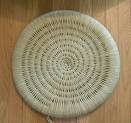
enza 円座 (えんざ ) round sitting cushion
Often uses outside on the veranda or for the tea ceremony.
It is used to sit on, not to kneel in Japanses seiza style.
shikigami 敷紙 ( しきがみ ) paper cushion
They are made from strong Japanese washi paper and soaked in kakishibu extract to make them stronger and resistant to lice. They can be used on tatami to keep the mats clean and hygienic.
Nowadays often vinyl is used instead.
yuton 油団 (ゆとん) "oil cushion"
They are made from strong Japanese washi paper and soaked in oil or covered with laquer. They feel very cool to the touch in summer.
:::::::::::::::::::::::::::::::::::::::::::::::::::::::::::::::::::::::::::::::::::::::::::::::::::::
. makura 枕(まくら)
pillow for sleeping
Kopfkissen
:::::::::::::::::::::::::::::::::::::::::::::::::::::::::::::::::::::::::::::::::::::::::::::::::::::
[ . BACK to WORLDKIGO . TOP . ]
[ . BACK to DARUMA MUSEUM TOP . ]
:::::::::::::::::::::::::::::::::::::::::::::::::::::::::::::::::::::::::::::::::::::::::::::::::::::




 Posts
Posts